


Most homeowners focus on the vibrant green blades they can see, yet the true secret to a resilient lawn remains entirely hidden beneath the soil. Without the right balance of nutrients, even the most expensive grass seed can struggle to establish; this often leaves a garden looking thin and vulnerable to drought stress. Using a targeted phosphorus fertiliser for grass roots is the most effective way to ensure your lawn builds the underground strength it needs to thrive throughout the British seasons.
We understand that navigating NPK ratios can feel overwhelming, especially when you are faced with conflicting advice on when to feed. It is common to feel disappointed when overseeding results do not meet expectations, but the solution often lies in understanding how phosphorus acts as a biological engine for growth. This science-led guide will show you how to develop a dense, deep root system that serves as the primary defence against weeds and moss. We will examine professional-grade nutrient ratios, such as the 6-10-8 balance found in Seed Start Pro, and explain exactly how to time your applications to achieve a lawn that is both healthy and dependable.
Key Takeaways
- Understand how phosphorus provides the energy required for plant metabolism and successful root development.
- Discover why applying a phosphorus fertiliser for grass roots is essential during seeding and overseeding to ensure new plants survive the British climate.
- Learn to interpret NPK ratios to ensure you are providing the correct balance of nutrients for each stage of lawn growth.
- Master the professional application techniques for granular feeds to achieve a dense lawn that naturally resists weeds and moss.
- Identify how Seed Start Pro (6-10-8) supports successful lawn renovations and long-term root health through a structured feeding programme.
The Role of Phosphorus in Grass Root Development
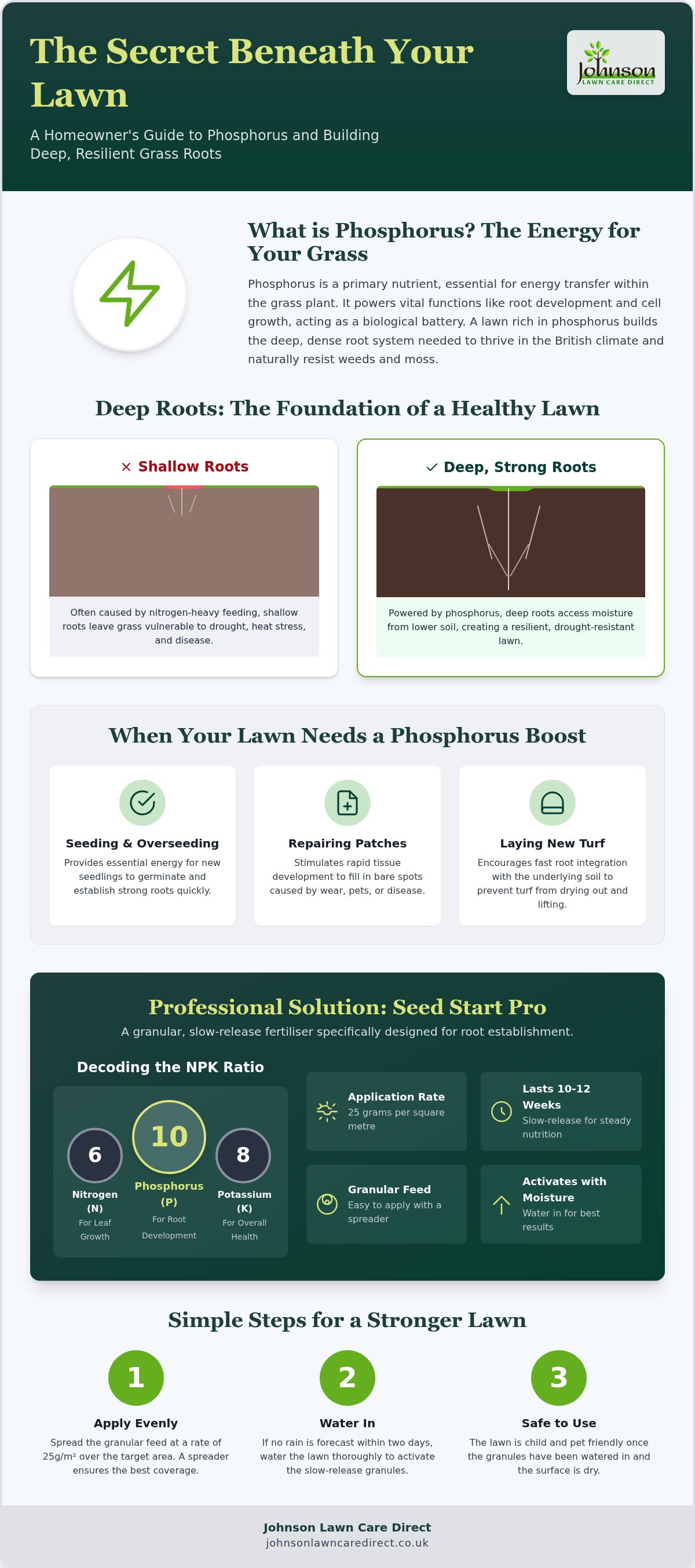
Phosphorus is one of the three essential plant nutrients identified by the NPK ratio on fertiliser packaging. While many gardeners prioritise nitrogen for its immediate impact on grass colour, phosphorus performs a more foundational role. It is the primary nutrient responsible for energy transfer within the plant; specifically, it is a core component of adenosine triphosphate (ATP). This molecule acts as a biological battery, providing the energy necessary for every metabolic process, from nutrient uptake to cellular repair.
In the root zone, phosphorus stimulates rapid cellular division and tissue development. This is why using a dedicated phosphorus fertiliser for grass roots is so effective. It ensures that the plant has the resources to build a complex, branching structure beneath the surface whilst establishing its presence. A healthy, expansive root system is the foundation of a dense lawn that acts as the primary defence against weeds and moss. While products like Weedol can help manage existing weeds, a thick sward prevents new seeds from finding the space to grow.
How Phosphorus Supports Cellular Energy
During the early stages of grass germination, energy demands are at their peak. New seedlings must quickly convert stored reserves into active growth to survive. Phosphorus enables this transition by allowing the grass to efficiently process sunlight and soil nutrients into growth energy. Without sufficient levels, even high-quality grass seed will struggle to establish a viable network. This is why professional-grade starters like Seed Start Pro utilise a 6-10-8 NPK ratio. The middle number indicates that 10% of the fertiliser is available phosphate, specifically balanced to prioritise root development over top-growth and ensure the plant is anchored securely.
The Relationship Between Roots and Drought Resistance
The resilience of a British lawn often depends on its ability to withstand dry spells during the summer months. Phosphorus-rich soil encourages vertical root growth, pushing the system deeper into the earth. These deep roots allow the grass to access moisture from lower soil profiles that remain damp when the surface has dried out. In contrast, a lawn that relies too heavily on nitrogen often develops shallow, horizontal roots that are easily scorched.
Applying a granular, slow-release feed such as Seed Start Pro at the standard rate of 25 grams per square metre provides a consistent supply of nutrients for 10 to 12 weeks. These granules activate with warmth and moisture; they should be watered in within a couple of days of application if rain is not forecast. Once watered in and dried, the lawn is child and pet friendly. Maintaining this root strength as part of a consistent feeding programme creates a lawn that is aesthetically pleasing and structurally capable of surviving the unpredictable UK climate.
When Your Lawn Needs a Phosphorus Boost
Identifying the right moment to apply a phosphorus fertiliser for grass roots is essential for maintaining a healthy garden. While established lawns in the UK often retain sufficient phosphorus within the soil structure, specific scenarios demand a targeted boost to ensure survival and density. The most critical times for application occur during the establishment of new grass, whether you are starting from scratch or repairing existing wear and tear.
Newly laid turf requires immediate root integration with the underlying soil to prevent the grass from drying out and lifting. Similarly, repairing patches or damaged areas caused by heavy foot traffic or pet use relies on the rapid tissue development that only phosphorus can stimulate. By providing these nutrients at the point of contact, you ensure that the grass can focus its energy on anchoring itself securely before the stress of summer heat or winter frosts arrives.
Seeding and Overseeding Requirements
Young seedlings possess a very limited root reach; they cannot yet tap into the nutrient reserves held deeper in the soil profile. This makes it vital for phosphorus to be immediately available in the top layer of the soil during the germination phase. Using a dedicated starter fertiliser like Seed Start Pro (6-10-8) provides the precise balance needed for this stage. This granular, slow-release feed is applied at 25 grams per square metre and continues to support the plant for 10 to 12 weeks. Like all our granular feeds, it is child and pet friendly once the granules have been watered in and the grass has dried. As highlighted in this University of Minnesota Extension guide, while phosphorus application is often restricted on established turf, it remains a permitted and necessary component for establishing new lawns effectively.
Identifying Phosphorus Deficiency in Grass
Visual symptoms of deficiency are often distinct if you know what to look for amongst the blades. Instead of the vibrant green typical of a healthy lawn, phosphorus-starved grass often takes on a dull, blue-green colour. In more severe cases, you might notice purple or reddish tints on the leaf blades; this is a clear sign that the plant's metabolic processes are stalling. Stunted growth and a general lack of density are also primary indicators. These nutrients activate with warmth and moisture rather than following a strict calendar; observing your lawn during periods of active growth in spring or autumn is key. For those looking to manage their lawn with professional precision throughout the year, adopting a structured Lawn Envy System ensures your grass never reaches the point of visible deficiency.
A Detailed Analysis of Nutrient Interaction
The NPK ratio is a standard system that allows homeowners to understand exactly what they are applying to their garden. These three numbers represent the percentage of Nitrogen (N), Phosphorus (P), and Potassium (K) contained within the fertiliser. When you are selecting a phosphorus fertiliser for grass roots, you must focus on that central figure. While nitrogen drives the lush green colour we all admire, phosphorus provides the energy for the roots to grow deep and strong. This underground development is the primary factor in determining whether a lawn can withstand the stresses of the British climate.
Professional feeding systems vary these ratios based on the specific biological needs of the grass throughout the year. Maintaining a healthy, dense lawn through consistent feeding is the best natural deterrent for common UK lawn weeds and moss. A thick sward leaves no room for opportunistic seeds to establish; this creates a self-sustaining ecosystem that requires fewer chemical interventions over time. When existing weeds are present, a treatment like Weedol can be used as a complement to a structured feeding programme.
Understanding the NPK Ratio for Roots
The 6-10-8 ratio of Seed Start Pro is specifically engineered as a high-phosphorus option to support young seedlings and root repairs. Contrast this with Autumn Guard Pro (17-5-20), which focuses more on potassium for winter strength. Whilst phosphorus builds the underlying root structure, potassium is responsible for strengthening the cellular walls of the grass blades. Using the correct ratio at the right time ensures the plant allocates its energy efficiently; this prevents the grass from becoming top-heavy and vulnerable.
Soil Science and Phosphorus Mobility
Phosphorus behaves quite differently in the soil compared to nitrogen. Nitrogen is highly mobile and can leach away quickly; however, phosphorus is relatively immobile. It tends to bind to soil particles and stays where it is placed. This is why using granular, slow-release fertilisers is so effective for root development. By applying granules at the standard rate of 25 grams per square metre using a Fertiliser Spreader, you ensure the nutrients are available exactly where the roots can reach them.
As detailed in Purdue Extension research, the interaction between phosphorus and the soil is influenced by several environmental factors. Soil pH plays a significant role in how available these nutrients are to your lawn. In many British garden soils, if the pH is too high or too low, the phosphorus can become chemically locked away. Our slow-release granules are designed to activate with warmth and moisture, providing a steady supply of nutrients for 10 to 12 weeks and ensuring your grass has access to the energy it needs regardless of minor soil fluctuations.
Best Practices for Applying Phosphorus Fertiliser
Precision in application is as vital as the nutrient profile itself. Achieving professional results at home depends on even distribution; this ensures every plant receives the energy required for root expansion. Using a calibrated Fertiliser Spreader is the most reliable way to maintain accuracy. By setting your spreader to the standard rate of 25 grams per square metre, you avoid the uneven, patchy growth that often occurs with hand-broadcasting. These granular, slow-release fertilisers are designed to sit within the sward and break down gradually over 10 to 12 weeks, providing a steady supply of energy to the root zone.
Applying a phosphorus fertiliser for grass roots requires a methodical approach to ensure the granules reach the soil surface. Before you begin, ensure the lawn is clear of debris. It is also helpful to mark out your garden into sections to ensure you don't miss any areas or accidentally double-apply. Consistency is the hallmark of a high-standard lawn; it transforms a simple garden into an established, resilient landscape.
Application Timing and Weather Patterns
Nutrients in our granular feeds activate with warmth and moisture rather than following a rigid calendar. For the best results, apply your fertiliser ahead of forecast rain or water it in manually within two days of application. This moisture helps the granules settle and begins the energy transfer process. It's important to distinguish between products here; while phosphorus-heavy feeds like Seed Start Pro (6-10-8) must be watered in to activate, our Summer Boost Pro (12-0-12) features a drought-safe coating that requires no watering in at all.
Safety and Environmental Responsibility
We prioritise the safety of your family and the local environment. All our granular fertilisers are child and pet friendly once they have been watered in and the grass has dried completely. Professional-grade granular feeds are also a more responsible choice for the British environment; they remain stable in the soil and prevent the chemical runoff often associated with liquid or spray alternatives. If you have grazing pets, such as rabbits or guinea pigs, we advise keeping them off the treated lawn for four weeks after application to ensure total safety.
Professional Phosphorus Solutions for Your Lawn
At Johnson Lawn Care Direct, we believe that professional results are achieved through a structured feeding programme that removes the guesswork from garden maintenance. While many retail products provide a generic nutrient boost, our approach focuses on the specific biological requirements of the grass throughout the year. By using a high-quality phosphorus fertiliser for grass roots during critical growth phases, you ensure your lawn has the structural integrity to remain healthy and dense. This systematic method automates the delivery of the correct nutrients at the right time; this allows you to focus on enjoying the aesthetic perfection of your garden.
Our methodology is designed to empower homeowners by providing access to the same grade of nutrition used on professional turf. By following a consistent schedule, you create a self-sustaining environment where the grass remains the dominant species. This underground strength is the most effective way to protect your investment and ensure that your garden remains a source of pride throughout the British seasons.
The Seed Start Pro Advantage
For homeowners focused on root development or successful seeding, Seed Start Pro is the definitive choice. Its 6-10-8 NPK ratio provides a concentrated dose of phosphate exactly where it is needed. This granular, slow-release formulation ensures that young seedlings and established plants receive consistent nutrition for 10 to 12 weeks. To support this underground development, you must also follow correct maintenance habits. We advise never mowing more than one-third of the grass height at once; this prevents the plant from becoming stressed and allows it to maintain the energy reserves required for root expansion.
Implementing a Year-Round Root Strategy
Root development is not a one-time task but a continuous process that peaks during the spring and autumn months. These windows provide the ideal combination of soil warmth and moisture for nutrients to activate effectively. Within the wider Lawn Envy System, phosphorus works alongside nitrogen and potassium to create a balanced environment. While Seed Start Pro handles the foundation, our other seasonal feeds, such as Spring Surge Pro (17-5-8) and Autumn Guard Pro (17-5-20), ensure the lawn remains resilient against changing conditions.
For those who wish to master these professional techniques, the Lawn Envy Masterclass provides the educational support needed to transform your garden. You can also explore our main website to find a bespoke analysis of your lawn needs, ensuring every application of phosphorus fertiliser for grass roots is timed to perfection. By committing to a consistent feeding schedule and applying granules at the standard rate of 25 grams per square metre, you build a lawn that is structurally capable of resisting weeds and moss whilst maintaining a vibrant, healthy colour.
Securing Your Lawn's Future from the Ground Up
A resilient garden begins with the invisible energy transfer occurring deep within the soil. By prioritising phosphorus during the establishment phase, you provide your grass with the biological resources needed to develop a dense and drought-resistant root network. This foundational strength serves as the primary defence against the encroachment of moss and weeds throughout the British seasons.
Applying a professional-grade phosphorus fertiliser for grass roots ensures that your new seed or turf has immediate access to essential nutrients without the risk of runoff. As Wiltshire’s Best Lawn Care Company 2026, we have refined our slow-release granules to deliver consistent results for thousands of UK homeowners. Whether you are repairing a small patch or renovating an entire garden, a structured feeding programme provides the reliability and peace of mind that comes with high-standard maintenance.
We encourage you to take the next step in your lawn care journey. With the right nutrients and a methodical approach, you can achieve a lush, healthy sward that remains a source of pride for years to come.
Frequently Asked Questions
Does grass need phosphorus for root growth?
Grass requires phosphorus for vital biological functions including energy transfer and cellular division within the root system. It is particularly critical during the germination of new grass seed and the establishment of newly laid turf. Without adequate phosphorus, a lawn will struggle to develop the deep network required to withstand environmental stress.
What is the best phosphorus fertiliser for grass roots?
The most effective phosphorus fertiliser for grass roots is one with a higher middle number in the NPK ratio, such as Seed Start Pro (6-10-8). This professional-grade, granular, slow-release formula provides a steady supply of nutrients for 10 to 12 weeks. It ensures that young plants have consistent access to the phosphate needed for vigorous root expansion.
Can you put too much phosphorus on a lawn?
Applying excessive amounts of phosphorus can lead to nutrient lock-out or environmental runoff; therefore, accuracy is essential. We recommend following a professional application rate of 25 grams per square metre to ensure your lawn receives the correct dosage. Using a calibrated spreader helps maintain even coverage and prevents waste.
When should I apply phosphorus-rich fertiliser in the UK?
You should apply phosphorus-rich feeds during periods of active growth in the spring or autumn. These windows provide the warmth and moisture necessary for the granules to activate. It is especially important to use these fertilisers when overseeding or repairing bare patches to give new seedlings the energy they need to anchor securely.
Is phosphorus fertiliser safe for pets and children?
Our granular fertilisers are child and pet friendly once they have been watered in and the lawn has dried completely. The granules are designed to sit within the grass sward and break down gradually. We advise keeping grazing pets, such as rabbits or guinea pigs, off the grass for four weeks following application as a safety precaution.
Do I need to water in phosphorus fertiliser?
Yes, phosphorus-rich feeds like Seed Start Pro must be watered in within two to three days of application to be effective. Alternatively, you can apply the granules just before a period of forecast rainfall. This moisture allows the nutrients to move through the sward and reach the root zone where they can be absorbed.
What is the difference between phosphorus and potassium for roots?
Phosphorus stimulates the initial growth and energy transfer for new roots; however, potassium performs a different role. Potassium, which is found in higher concentrations in Autumn Guard Pro (17-5-20), strengthens the cellular structure and improves overall stress tolerance. Both are essential for a resilient lawn but serve distinct biological purposes.
How long does phosphorus fertiliser take to work?
You will notice a gradual improvement in root strength and lawn density over several weeks as the nutrients are absorbed. Because our feeds use granular, slow-release technology, they provide consistent nutrition for 10 to 12 weeks. This steady delivery prevents a sudden surge of top-growth and focuses the plant's energy on building a sustainable root system.
Disclaimer
The guides in our Lawn Care Library offer general lawn care information for UK homeowners. Every lawn is different, and factors such as soil, grass type, aspect and local conditions all affect what yours needs. For advice tailored specifically to your own lawn, take a look at our Personalised Lawn Envy Plan, or get in touch and we will be glad to help.


