



Spring Surge Pro
- Regular price
-
£22.99 - Regular price
-
- Sale price
-
£22.99
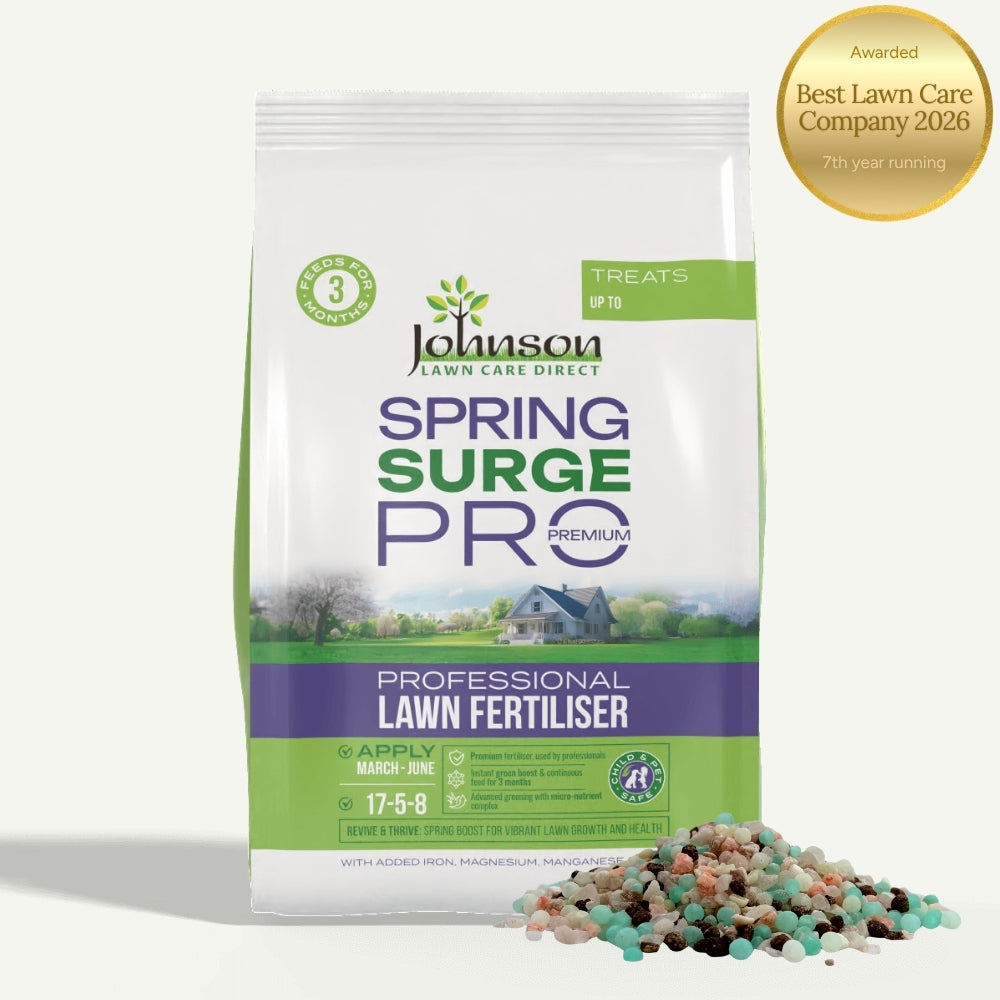
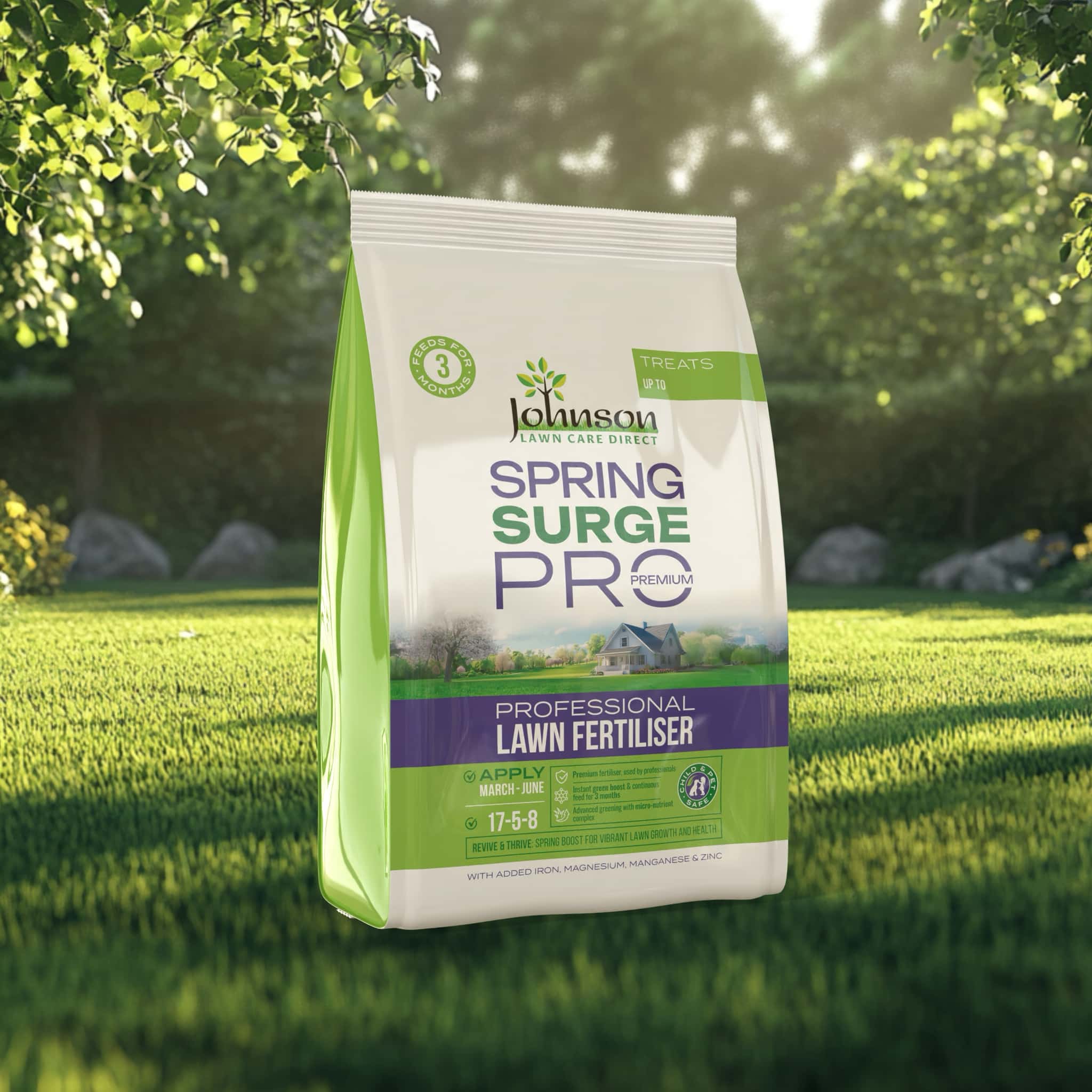
Professional Lawn Fertiliser
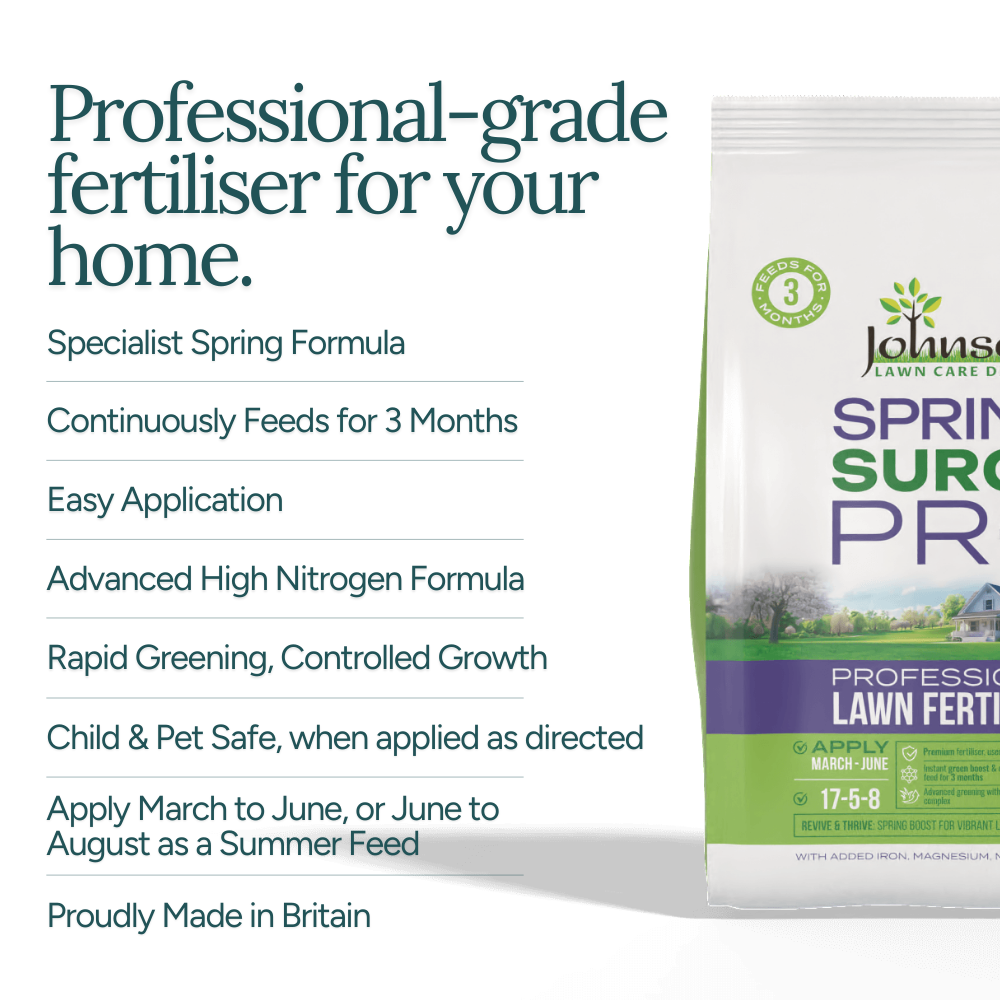
Kick-start strong growth and rich green colour after winter.
Couldn't load pickup availability
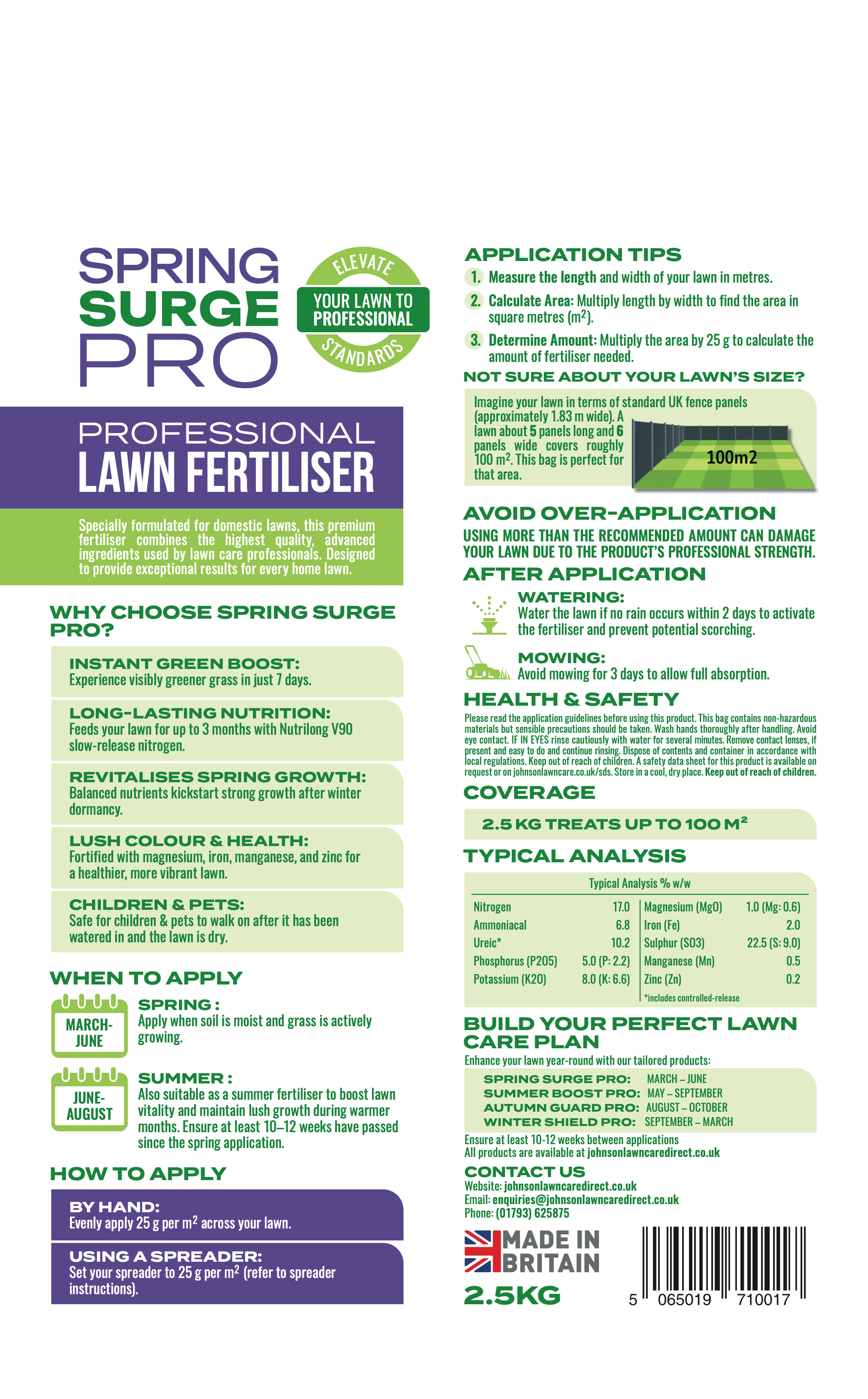
Revive your lawn after winter with a rich green-up and 12 weeks of slow-release feeding for stronger, greener spring growth.
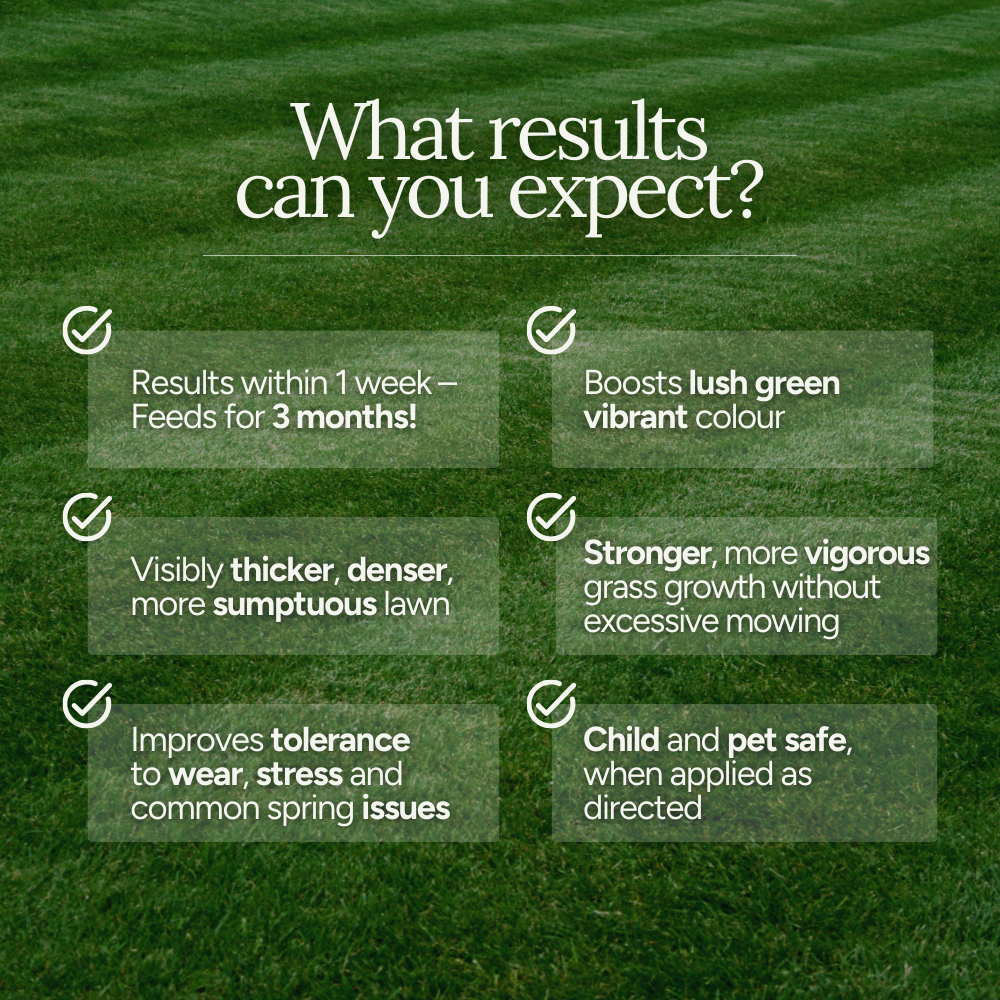
✅ Professional-grade fertiliser for home use – the same high-performance formula used by lawn care professionals, now available for you to apply yourself
🌱 Feeds your lawn for up to 12 weeks – long-lasting slow-release nutrients keep your grass strong and healthy
⚡️ Fast-acting green-up within 7 days – see visible results quickly as your lawn wakes up from winter
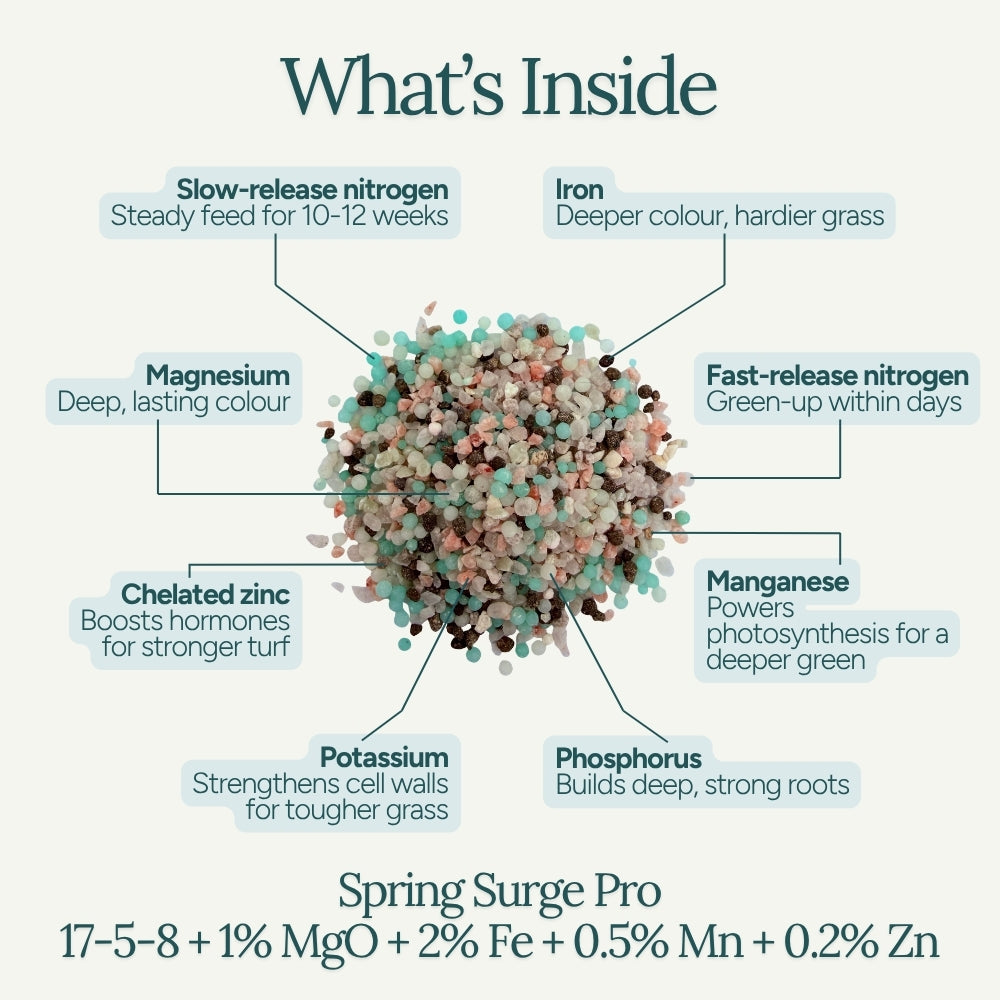
💪 Boosts colour, strength & overall lawn condition – fortified with iron, magnesium, manganese and zinc
Shipping, Returns & Our Guarantee
Same Day Despatch
Order before 3pm (Mon–Fri) for same-day despatch. All orders are shipped using a tracked 24-48 hr service.
Delivery
• Free delivery on all orders up to 25kg. Most arrive next day, but please leave up to 48 hours.
• 25kg bags: £7.99 delivery via a 24-48 hour tracked service.
Returns
Changed your mind? No problem. You can return unopened, unused items within 14 days. Just contact us to get started. Return postage is not included.
➡️ View our Returns & Refunds Policy
Green-Up Guarantee
We’re so confident in our fertiliser, we guarantee visible improvement within 14 days when applied as directed. If not, we’ll give you a refund or store credit towards your next purchase. Conditions apply. Click below for full details.




Expert lawn analysis and a bespoke plan, written by hand for your lawn and no one else's.
Every lawn is different. Soil, shade, patches, moss, weeds, drainage, wear from children and dogs, and how much time you can give it all change what your lawn actually needs. The Personalised Lawn Care Plan is my expert analysis of your lawn. You answer a short questionnaire and send photographs, and I personally review them and write you a step-by-step plan for the whole year setting out exactly what to do, when to do it, in what order, and why.
Your plan is delivered digitally or as a personalised printed book and includes lifetime access to the Lawn Envy Masterclass, our nine-module course, as the supporting library behind each recommendation. It is the same diagnostic approach behind our seven years as the region's best lawn care company, applied to your lawn.


Award Winning Family Business

Made in Britain
Product Details
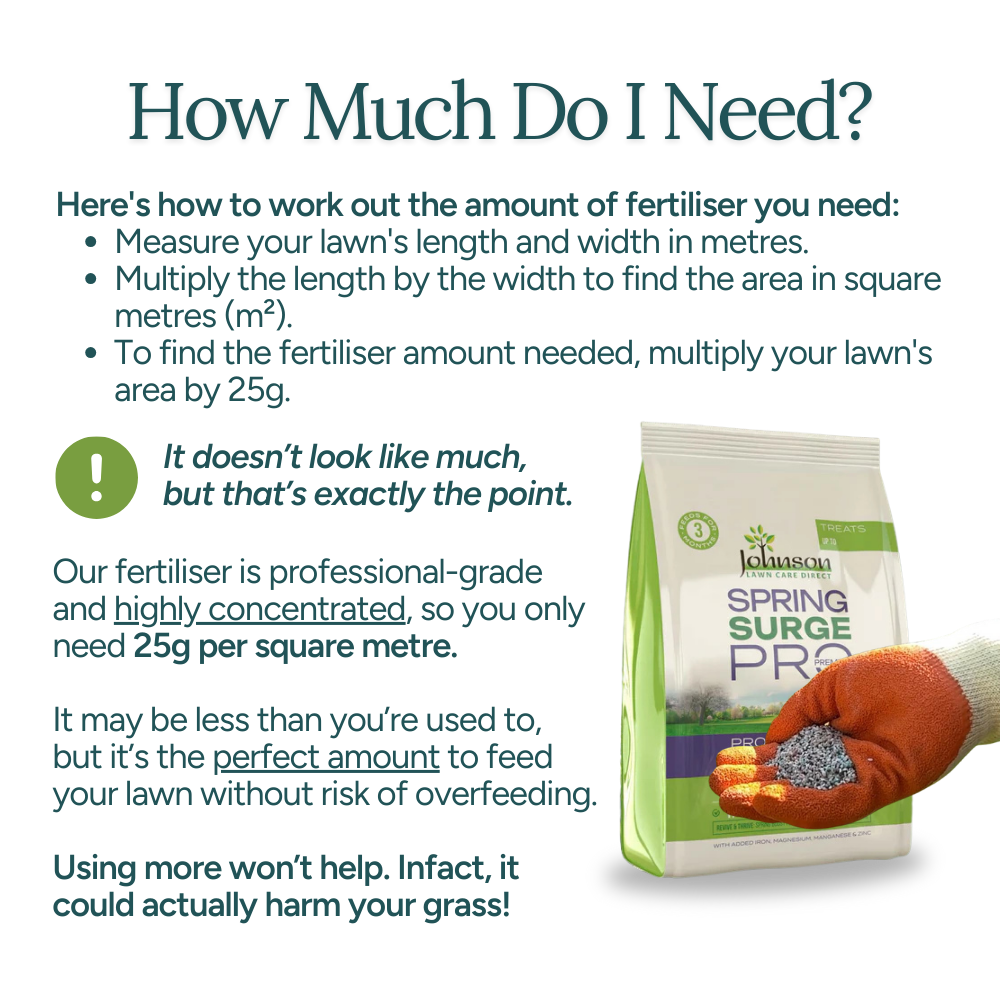
How Much Do I Need?
All our fertilisers are designed to be applied at 25g per m² — the perfect rate for professional results without the risk of overfeeding.
You might be used to heavier application rates with DIY products, but our formulas are concentrated, so a little really does go a long way.
To work out how much you need:
- Measure your lawn using our handy Lawn Size Calculator.
- Multiply your lawn’s size (in m²) by 25g
- Choose the pack size that covers your area — if you’re between sizes, round up to ensure full coverage.
Bag coverage guide:
- 50m² bag = 1.25kg
- 100m² bag = 2.5kg
- 200m² bag = 4.7kg
- 500m² bag = 12.5kg
- 1000m² bag = 25kg
Stick to 25g per m² and you’ll see fast, safe, and visible improvement.
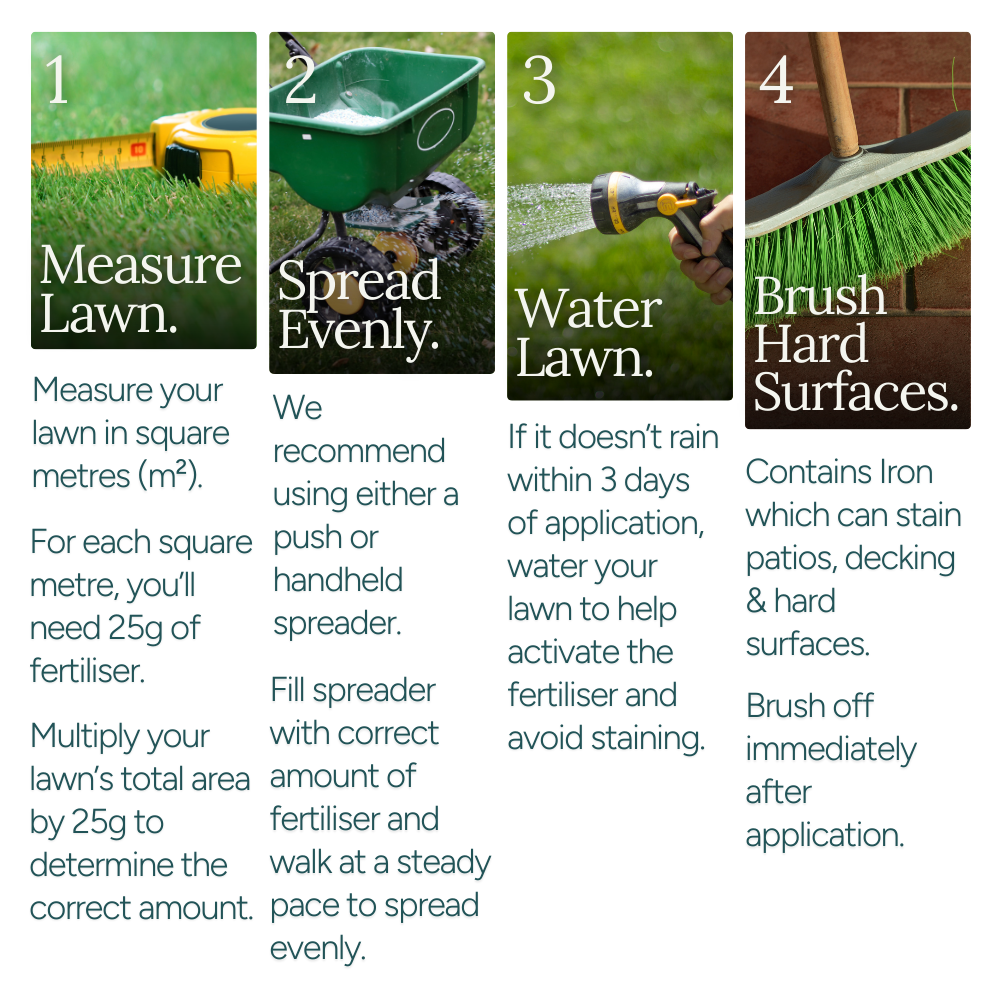
How to Apply?
Follow these simple steps for best results:
For further detailed instructions, see our How to Apply Lawn Fertiliser Guide
Ingredients and How They Help My Lawn
Every lawn feed we create is designed with purpose — to give your grass exactly what it needs, when it needs it. Each blend in our range uses a carefully balanced mix of nutrients to boost colour, strengthen roots, build resilience and improve overall lawn health.
Our seasonal fertilisers are also formulated to work in harmony across the year — each one building on the last. When used together, they deliver the perfect balance of nutrition to keep your lawn looking its best in every season.
Why our fertilisers are SO different
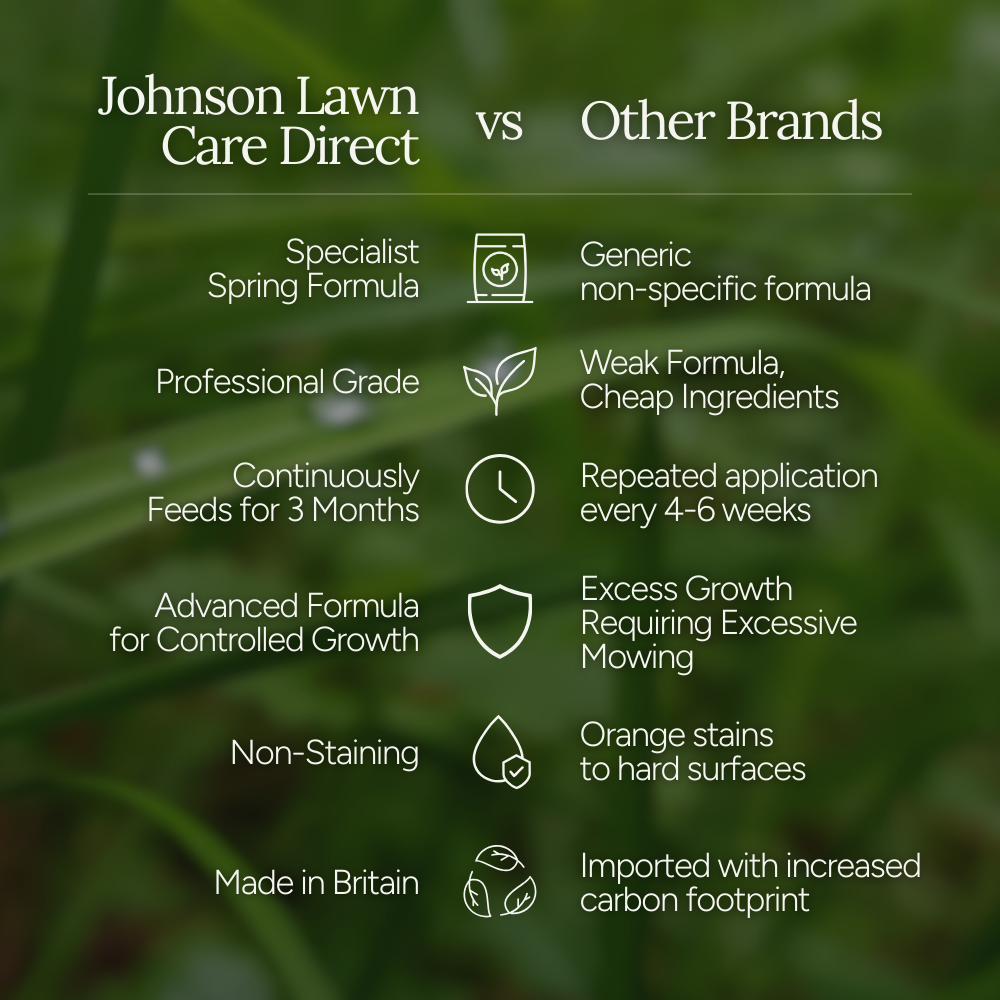
We take lawn health seriously. We know everyone wants a green lawn, but a truly beautiful lawn is more than just a colour. Any feed can turn a lawn green for a fortnight. Keeping it green, thick and strong season after season is a different job, and it takes a different level of feed.
Here is the difference between our professional-grade feeds and the standard domestic ones.
All backed up by our 365-Day Green-Up Guarantee:
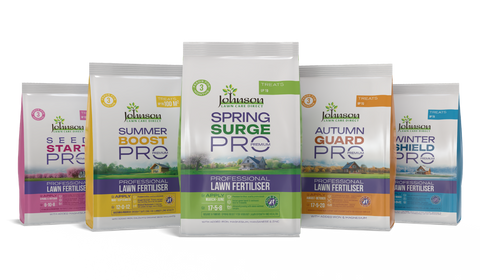 Johnson Lawn Care DirectProfessional-Grade Fertilisers
 Standard Retail Lawn FeedsDomestic-Grade Fertilisers
Four formulas, one for each season
One bag covering two seasons
Professional-grade nutrient sources
Standard-grade nutrient sources
Up to three times the key nutrients
Low levels of the key nutrients
Added Micronutrients & Biostimulants
Rarely include micronutrients or biostimulants
Advanced coating, releases with heat and moisture
Basic coating, releases at a fixed rate
Feeds for up to 3 months
Feeds for 4 to 6 weeks
Summer feed goes down without watering in and will not scorch
Needs watering in, or the lawn scorches
Formulated and supported by RHS-trained lawn care professionals
No expert advice or support
Proudly Made in Britain, to our own formulation
Often white-label products made abroad
Why it matters
Your lawn wants different things in March, June, September and December, so we give it four different feeds. Spring pushes growth and colour, summer holds it through heat and drought, autumn builds the roots that carry it through winter, and winter hardens the grass and works on moss. The nutrients change because the job changes. You never have to work out what your lawn needs next; the bag that arrives is the right one.
Why it matters
A "spring and summer" feed treats a lawn bursting out of dormancy in April the same as a lawn that is brown on top and fighting for its life in a July drought. Those are two different problems, and one bag cannot solve both. Push growth when the lawn is already stressed and you weaken it further. Nothing in the bag is built for drought, for moss, or for winter. It is guesswork, with the lawn paying for the mistakes.
Why it matters
Two bags can carry the same numbers on the label and give completely different results, because the grade of the raw ingredient decides how much of that number the grass actually receives. Ours are the trade-grade sources used in professional lawn care: purer, more consistent, and in a form the grass takes up readily. The nutrient value on the label is what reaches the roots, every application, so the response is full and it is the same every time.
Why it matters
White-label feeds are built to a price, and the grade of the nutrient source is where the saving is made. Lower-grade sources are less pure and less consistent, and less of what is in the bag is in a form the grass can take up. The response is weaker than the packaging suggests, and it varies from bag to bag. The number on the label is not the number your lawn gets.
Why it matters
Nitrogen, phosphorus and potassium are the three nutrients that build a lawn, and the most expensive to put in a bag. Ours carry them at professional rates, up to three times the concentration of a typical retail feed. Our spring feed is 17% nitrogen, for example, against 5% or 6% in most retail equivalents. At these rates nitrogen thickens the sward and holds its colour, phosphorus drives the roots down, and potassium hardens the grass against drought, cold and disease. The difference shows within weeks, is still there at the end of the season, and the lawn starts the next season ahead instead of from zero.
Why it matters
Nitrogen, phosphorus and potassium are the costly part of a fertiliser, so retail feeds keep them low. A small dose of fast-acting nitrogen turns the grass green within days, which looks like the feed has worked. It has not. There is too little behind it to thicken the sward, grow roots or build any resistance, so the colour fades within a few weeks and the lawn is back where it started. Nothing has been built, and the next bag starts from zero.
Why it matters
Nitrogen, phosphorus and potassium make a lawn grow. The added ingredients decide how well it uses them, and how it looks. Iron deepens the colour and hardens the grass. Magnesium and manganese are essential to making chlorophyll; short of either, a lawn stays pale however much feed goes on. Calcium strengthens the grass at a cellular level. Zinc drives the enzymes behind growth, and ours is chelated, the form roots take up readily. The biostimulant helps the grass take up and hold water, so it stays greener for longer. We added them because when we soil-tested our own clients' lawns, all of them already on professional trade feeds, the same deficiencies came up again and again. These are what separate a good lawn from a stunning one.
Why it matters
These ingredients are expensive, and none of them gives the fast, visible change that nitrogen does, so a bag built to a price leaves them out. The lawn hits a ceiling: fed, green enough, and never any better than that, because it is short of something the main nutrients cannot replace. The deficiency cannot be seen; it only shows in a soil test, and most lawns are never tested. The lawn stays average and nobody knows why.
Why it matters
Feeds your lawn when it is growing, not when you happen to spread it. The coating opens with warmth and moisture and closes when the soil turns cold or dry, so the release speeds up and slows down with the weather, week by week. You do not have to time it to the forecast; put it down in season and the granule does the rest. Nothing is released while the grass cannot use it, and nothing is held back while it can, so the whole bag goes into growth and the growth is even. It is the coating technology developed for professional golf greens, and it costs considerably more to make.
Why it matters
Releases nutrients to a fixed schedule whatever the weather is doing. In a cold or dry spell, when the grass has stopped growing, the feed carries on releasing into soil the roots are not drawing from, and much of it is gone before growth returns. In a warm, wet spell, when the grass could take far more, it gets the same slow trickle and growth stalls. Part of the bag is wasted, and the lawn is fed least in the weeks it could grow most.
Why it matters
One application feeds for 10 to 12 weeks, so four feeds cover the whole year with no gap between them. The lawn is fed continuously, and that is what changes it: each season builds on the last instead of starting again, which is how a lawn gets thicker and stronger year on year rather than going round in circles. Four afternoons a year, no calendar to keep. Bag for bag ours costs more; over the year it costs less, because a feed that lasts two to three times as long needs buying and spreading a third as often.
Why it matters
A feed that lasts four to six weeks would need applying eight to twelve times a year to keep a lawn fed. Nobody does that. What happens instead is feed, fade, and a gap of weeks or months before the next bag, so the lawn is unfed for most of the year and whatever the last feed built is gone before the next one starts. To match a three-month feed you buy and spread it two to three times as often. Over the same period that costs around 20% more, for a lawn that spent most of it unfed.
Why it matters
British summers are hotter and drier than the feeds most people use were designed for. A granular feed has always needed watering in, and in a dry summer, on a large lawn, or under a hosepipe ban, that is often impossible, so the lawn goes unfed through the hardest season of the year. Our summer feed was built for the summer we now have. Its drought-safe coating means it goes down without watering in and will not scorch, even on a dry, brown lawn. It waits, releasing only when moisture and temperature allow, so when the rain returns the feed is already there and the lawn greens up quickly, ahead of any lawn that spent the summer unfed. A lawn needs feeding all year round, whatever the weather does, and a feed that can do that costs more to make.
Why it matters
Standard feeds need watering in within a few days, or they sit on the surface and scorch the grass. In a dry summer that leaves two choices: water the whole lawn by hand, which is not possible on a large lawn or under a hosepipe ban, or leave it. Most people leave it. The lawn faces the hottest, driest weeks of the year with nothing behind it, and when the rain returns it recovers slowly and comes back thinner. The season the lawn needs the most help is the one it gets none.
Why it matters
Our feeds were formulated by RHS-trained lawn care professionals who still treat private clients' lawns every week, and the people who made them are the people you speak to. Feeding a lawn raises questions: whether a brown patch is dormancy or disease, when to feed around scarifying, why one area is slow to respond. Get them wrong and you lose a season. Ask us and the answer comes from someone who has almost certainly dealt with the same thing on a client's lawn this month. We are a family business, and a customer with a stunning lawn is the whole point of it.
Why it matters
A retail feed is sold from a shelf. The instructions on the bag are the only advice you will get, and when the lawn does not respond, or a problem appears, there is nobody to ask. You guess, or search online and find ten answers that disagree. A wrong guess costs a season. How the lawn turns out comes down to what you happened to know already.
Why it matters
Made in Britain, to a formulation we developed ourselves, so we know exactly what is in every bag and why. It is not a generic product with our name printed on it. It also travels a short distance from factory to your door, with a smaller carbon footprint than a bag shipped in from abroad.
Why it matters
Many retail feeds are white-label products: a generic formulation made elsewhere, often abroad, with a brand name printed on the bag. The company selling it did not formulate it and often cannot say what is in it, which is why nobody at the shop can advise you. It has usually travelled a long way to reach the shelf.
Additional Information
NPK Ratio ?
Additional Ingredients
Application Rate
Spreader Setting
When to Apply
Season
Longevity
Granule Size
Watering
Child & Pet Safe
Storage & Safety
Safety Data Sheets ?
FAQs
What type of lawn fertiliser should I use?
The best results come from using a fertiliser that is formulated specifically for the current season.
Different times of year require different nutrient balances. A one-size-fits-all product cannot provide the same level of targeted support.
Our seasonal range was developed through years of professional lawn care experience and is designed to work as a complete programme throughout the year. When used consistently, it builds stronger roots, more even colour and better resilience.
- Spring Surge Pro supports recovery and early growth.
- Summer Boost Pro provides steady feeding during heat and dry spells.
- Autumn Guard Pro focuses on strengthening roots before winter.
- Winter Shield Pro helps maintain colour and resilience in colder conditions.
When is the best time to apply lawn fertiliser in the UK?
Apply lawn fertiliser when the grass is actively growing and soil temperatures are above 8°C.
The lawn should be frost-free and not waterlogged. Avoid applying just before heavy downpours. Light rain within 1–2 days is ideal, as it helps move nutrients into the soil.
How much fertiliser do I need for my lawn?
All Johnson Lawn Care Direct fertilisers are applied at 23–25 grams per square metre.
Although this may not look like a large amount, it is precisely the correct rate for professional-grade fertiliser. More does not mean better. Careful measurement ensures safe, consistent results and helps you get the full benefit from each bag.
If you are unsure of your lawn size, use our online measuring tool before you begin.
As a guide:
- 50m² lawn = 1.25kg
- 100m² lawn = 2.5kg
- 200m² lawn = 5kg
- 300m² lawn = 7.5kg
- 400m² lawn = 10kg
- 500m² lawn = 12.5kg
- 1000m² lawn = 25kg
Applying more will not improve results and increases the risk of overfeeding. Measuring accurately is key.
How often should I apply lawn fertiliser?
For a strong, healthy lawn, fertiliser should be applied every 10–12 weeks using a product designed for the current season.
Lawns have different needs throughout the year. Spring feeding supports recovery and growth, summer feeding helps the lawn cope with heat and stress, autumn feeding strengthens roots, and winter feeding maintains condition during colder months.
Feeding seasonally and consistently is what builds long-term lawn health.
Many customers choose our auto-delivery option so the correct seasonal fertiliser arrives automatically every 3 months. It takes the guesswork out of timing and ensures the lawn is always supported at the right stage of growth. For more information, see our Fertiliser Range.
How do I apply lawn fertiliser safely and effectively?
The safest and most effective way to apply lawn fertiliser is to measure carefully and spread evenly at 23–25g per square metre.
Professional-grade fertilisers are more concentrated than typical shop products. Accuracy is important. Applying more will not improve results and may cause damage.
Using a handheld or broadcast spreader makes it much easier to achieve an even finish. If you do not already have one, our Handheld Fertiliser Spreader is designed specifically to deliver the correct application rate.
When applied correctly and at the right time of year, seasonal feeding produces visible improvement within days.
Can I apply lawn fertiliser by hand?
Yes, but extra care is needed.
Measure the full amount out before you begin and wear gloves. Familiarise yourself with what 25g per square metre looks like, then spread small amounts evenly as you walk to avoid over-application in one area. Uneven hand application is the most common cause of dark patches or scorch.
A spreader provides more consistent results.
How do I spread lawn fertiliser evenly?
The most reliable method is to use a spreader and apply in two passes at right angles to each other.
This helps prevent missed strips and overlapping areas.
Before applying to the whole lawn, you can calibrate your spreader by testing on a measured 10m² area to ensure the correct rate.
Do I need to water lawn fertiliser in?
Yes. Our Spring, Autumn and Winter fertilisers must be watered in within 1–2 days of application. Watering moves the nutrients into the soil and down to the root zone where they are needed. If left sitting on the leaf during warm or dry conditions, concentrated nutrients can cause the grass to scorch, resulting in brown patches.
Summer Boost Pro works differently.
It contains a technologically advanced moisture-responsive nitrogen coating. Unlike conventional fertilisers that begin releasing immediately, this coating responds to moisture and temperature. Feeding begins only when moisture returns.
This means Summer Boost Pro can safely be applied during dry spells and even during hosepipe bans without the same risk of scorch. When rain arrives, feeding begins naturally.
If you are able to water during dry conditions, results will always be enhanced. However, the formulation is specifically designed to provide greater flexibility and safety during summer stress.
How long does lawn fertiliser take to work?
In active growing conditions, you can usually expect visible improvement within 7–10 days.
Cooler temperatures or low moisture may slow visible results slightly. Fertiliser also supports root development beneath the surface, which may not be immediately visible.
How soon can I mow after applying lawn fertiliser?
Avoid mowing for 1-2 day before application and 2–3 days after application to allow the fertiliser to settle and begin working.
Is lawn fertiliser safe for children and pets?
All of our fertilisers are safe for children and pets to walk on once it has been watered in and the grass is dry. We do not recommend grazing pets are allowed to digest the grass for at least 4 weeks. For more information, see our Children & Pet Safety Guide.
How do I avoid common mistakes when using lawn fertiliser?
Most issues arise from over-application, uneven spreading or incorrect timing.
Measure carefully. Apply evenly. Follow seasonal timing.
Professional-grade fertiliser works extremely well when used correctly. Feeding little and often, in line with the seasons, produces far better long-term results than occasional heavy applications.
That is why our fertilisers are designed as a year-round programme rather than a single treatment.
Definitely made a big difference in color and depth to the grass
It does what it says...
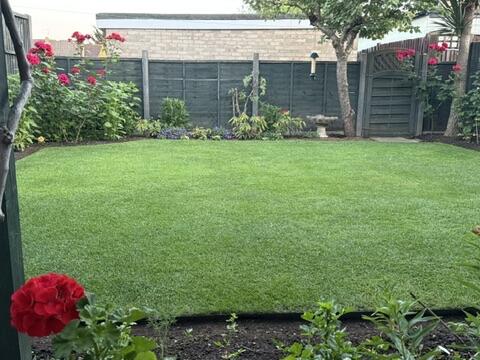
Great fertiliser
Excellent back up fromseller
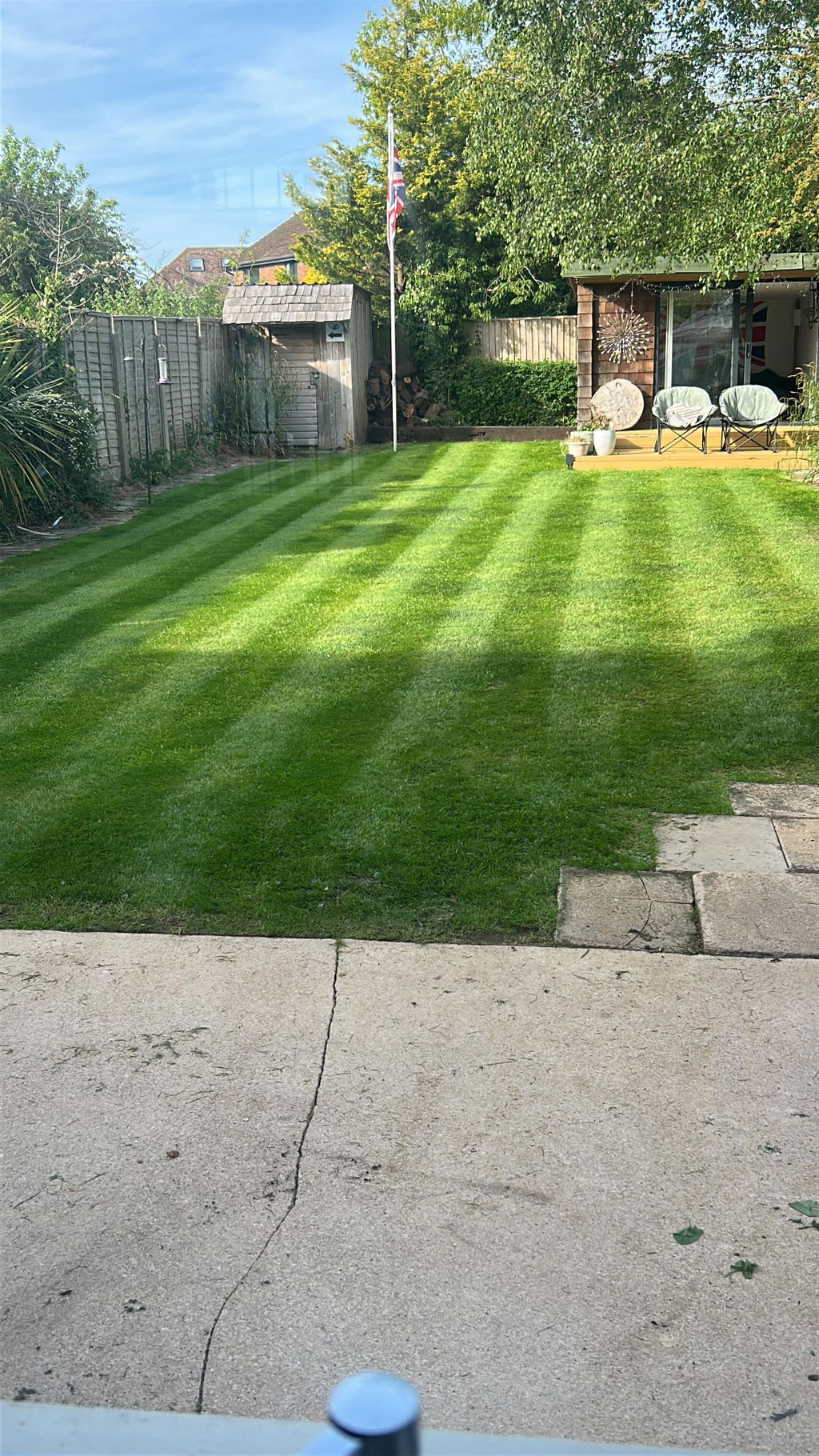
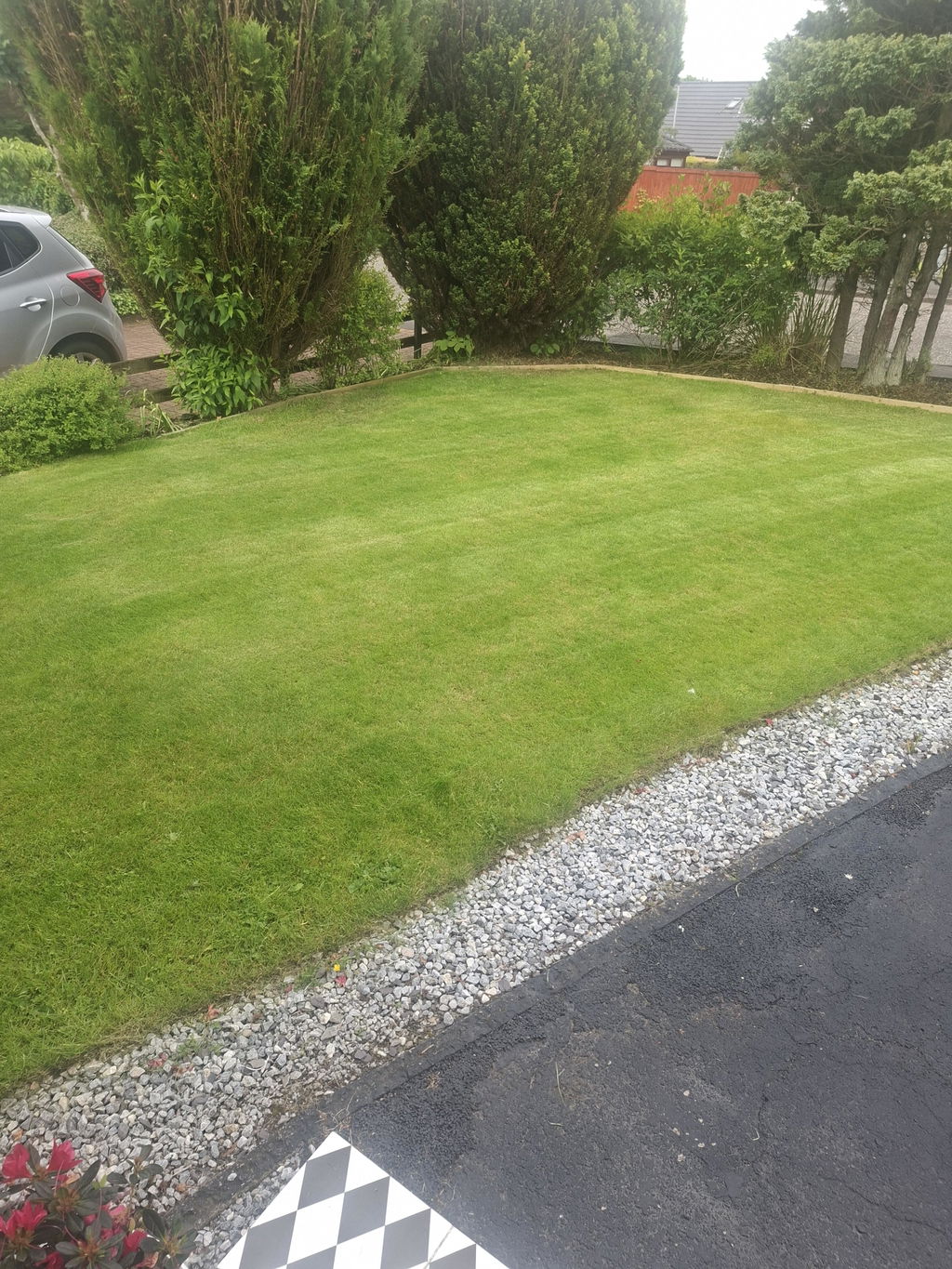
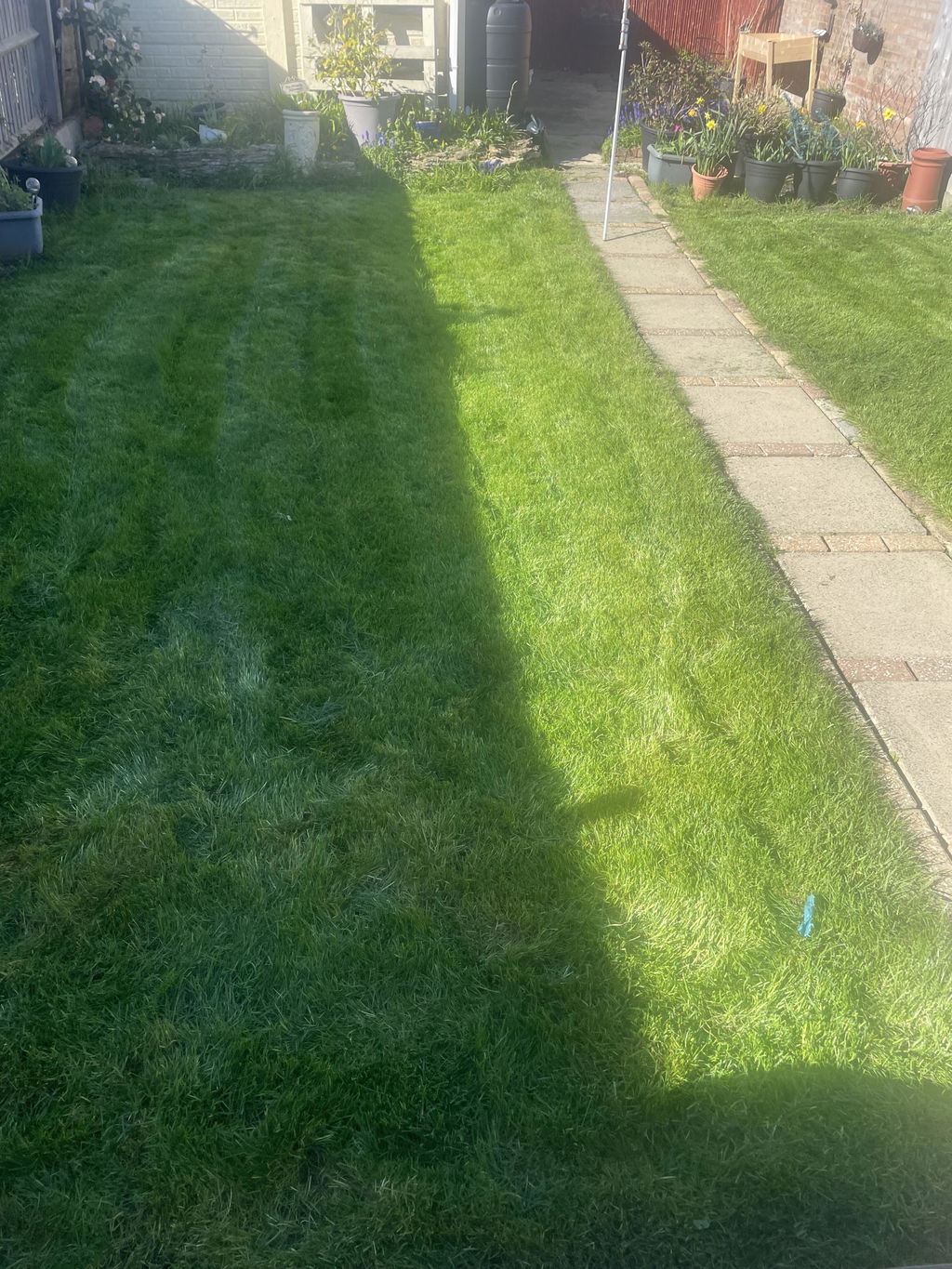
Very pleased with Spring surge. Back lawn after a long wet winter looking beautiful green and thick.
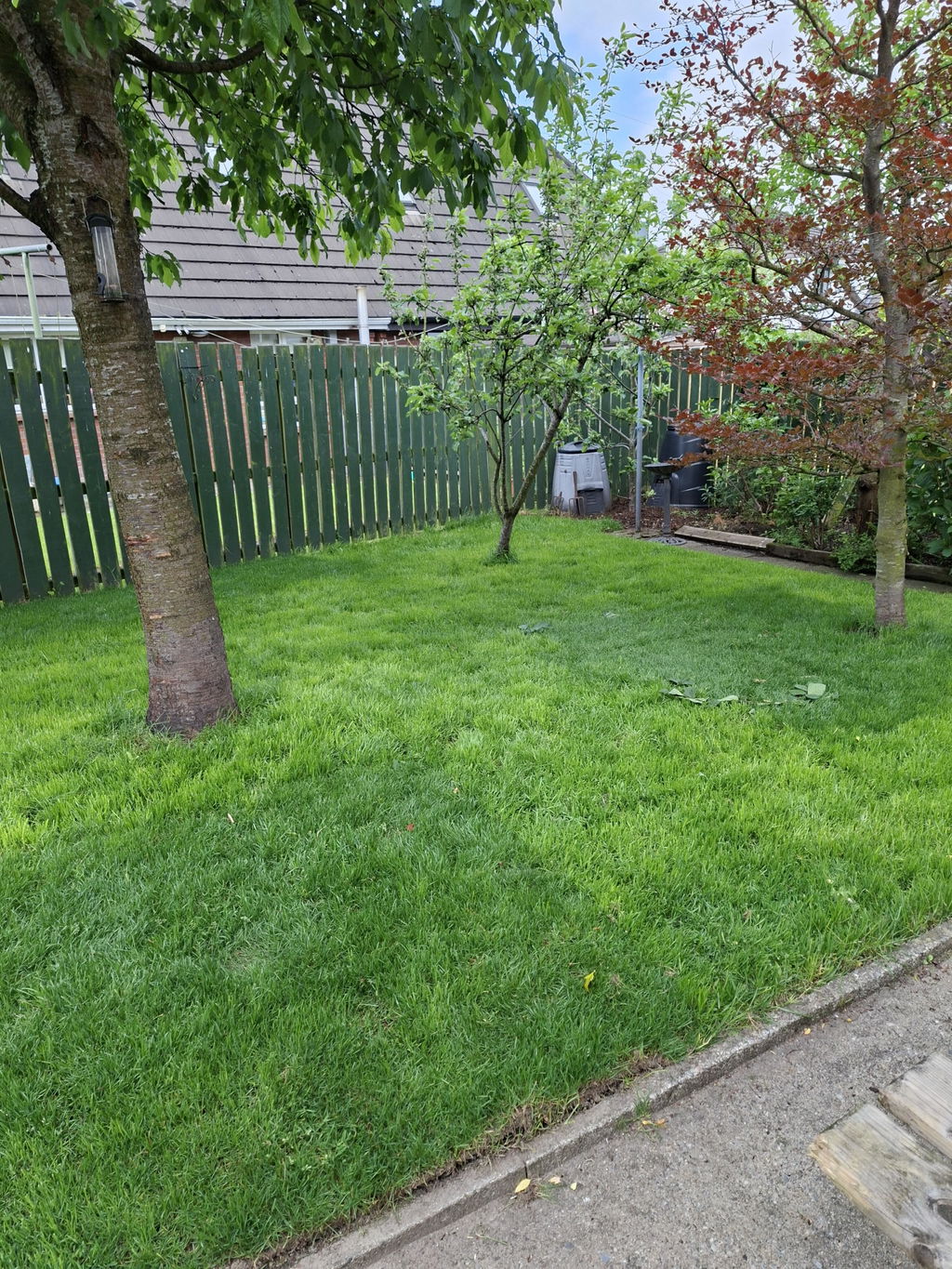
Last year the lawn never really looked good.
This year with your treatment it is already looking great and needs a second cut
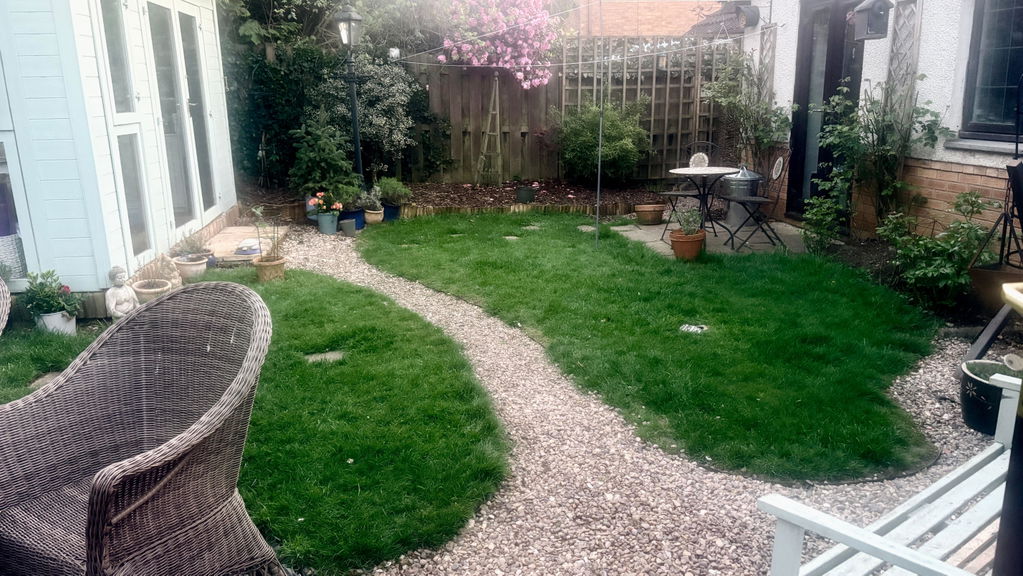
Really enjoying looking at my beautiful green lawn . There is definitely a difference over this time last year.
At the time of this review, you can get this bag of autumn grass fertiliser for around £30 The packet says you can use this to treat up to 100 m² The packaging does say this is the professional grade lawn fertiliser and to avoid over application because using too much because me is damaging is not doing anything I put this on using a hand spreader. It’s ideal for using this product from September onwards. If there’s no rain within two days of putting it down, you’ll have to get to the hose out and water it in and avoid mowing for three days to allow to be fully absorbed into the soil and not hoovered up by your lawn lawnmower. It takes a couple of weeks to see the result. I did a test patch on mine and I’ve attached a video. If you’re thinking about buying some of this product, I would recommend it. I wouldn’t say it was cheap, but a little does go a long way. I hope the video in this review is helpful

Easy to use straight from the bag

Great stuff, greens up lovely and thickens the lawn

Excellent lawn fertilizer for autumn application. I've used previously and found really effective. Appearance of grass greens up and doesn't encourage too much growth.I normally apply using our push spreader.A bit on the expensive side though.

The Autumn Guard Pro fertiliser is very easy to apply with a spreader and works perfectly. Within just a week, I noticed a clear improvement in the colour and health of my lawn. It’s long-lasting, feeding the lawn continuously for up to 3 months (according to the product description). However, it doesn't seem to kill the moss which is a common issue with autumn lawn care. It is priced at £29.99 for a 2.5kg pack, which I think is reasonable considering the quality.

I'm absolutely thrilled to see a professional-grade lawn fertiliser made accessible in this manner - built for the rough autumn and winter months, where lawns are the most forgotten about. I'll admit my lawn game this year has been awful. As you can see, after mowing my lawn, it's currently in a horrible mess from my lack of time to aerate, scarify and overseed this year. Nevertheless, I'm confident I can get the roots back to their best.This fertiliser is thankfully accessible for the general user. I followed the clear, simple instructions behind to calculate the m2 of my lawn, measure out the necessary 25g x lawn area fertiliser amount out to then sprinkle over the lawn. The fertiliser itself brings immense promise. The beautiful, colourful blend explains being a slow-release mix of nitrogen, iron and magnesium. The blend aims to provide enough nutrition to strengthen roots for the harsh winter and produce thicker, denser and vibrant grass. It's mentioned that one treatment lasts 10-12 weeks (3 months).The instructions mention two methods to applying this, using a spreader or, more usefully for someone with a small lawn like me, by hand! I was grateful to know this was official enough to do, and I set out on my way to equally scatter 425grams across my entire lawn patch.It's now set in place, and I'm waiting for some rainfall! I will share results as I see a difference!
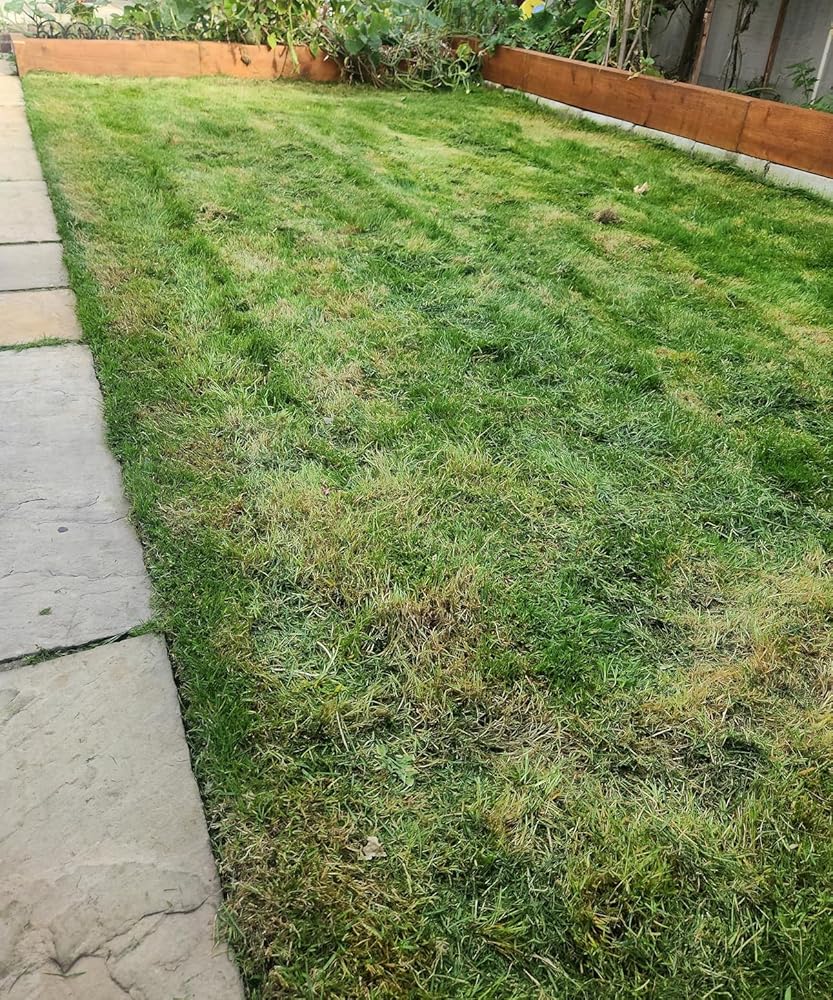
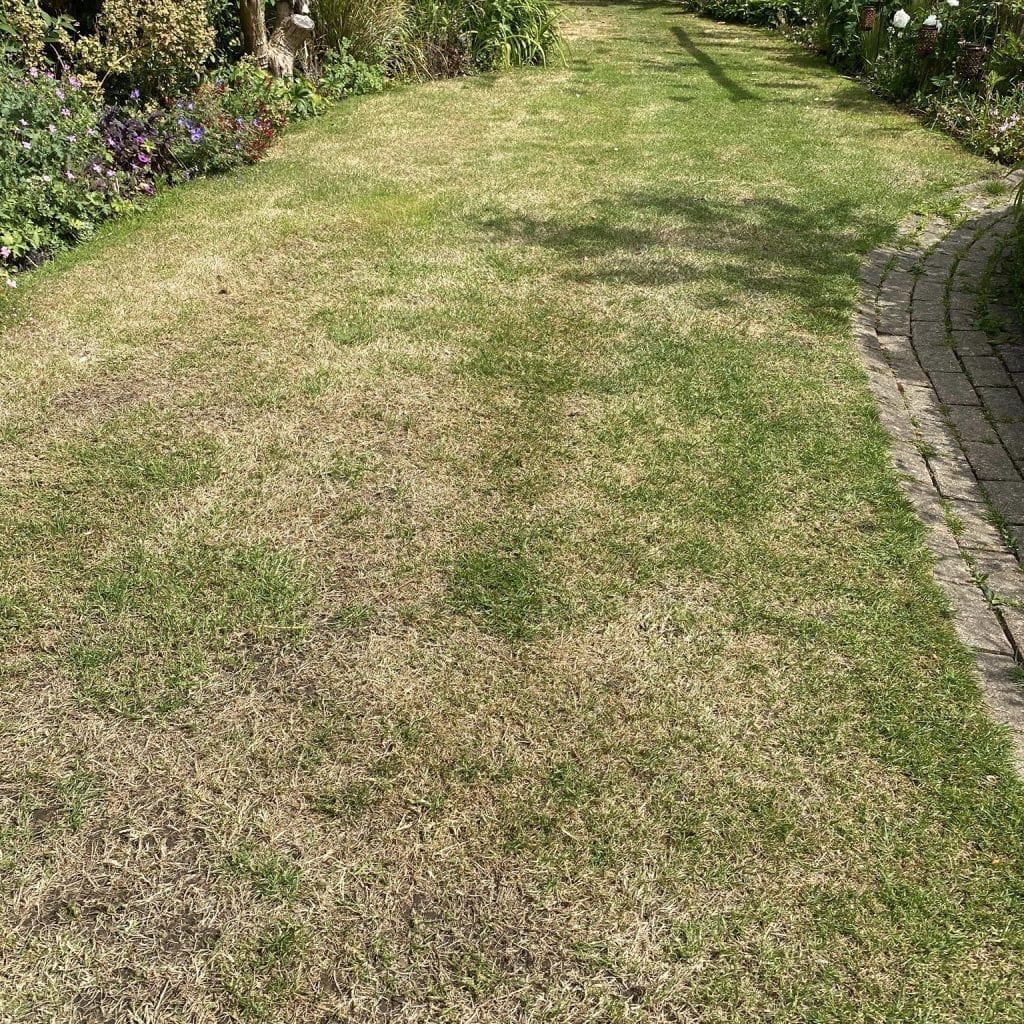
After all the dry weather we’ve had this summer, the grass on the lawn has become very patchy, with areas so bad there is hardly any grass left.I was really pleased to have the opportunity to try out this product which is designed to revive the lawn and protect it over the winter months.More importantly, we have grandchildren and cats and needed something that is both child and pet friendly which this one is.It was relatively easy to work out how much to use and how to apply as the instructions on the pack are very clear. The weather has now turned to rain so I have not had to water the lawn. I am quite impressed at how quickly after application, the patchy areas on the lawn are progressively disappearing. It will probably require more attention in the next few weeks although it is not advisable to use more than recommended.At just under £30, it is not the cheapest out there, but this is a non toxic formula.


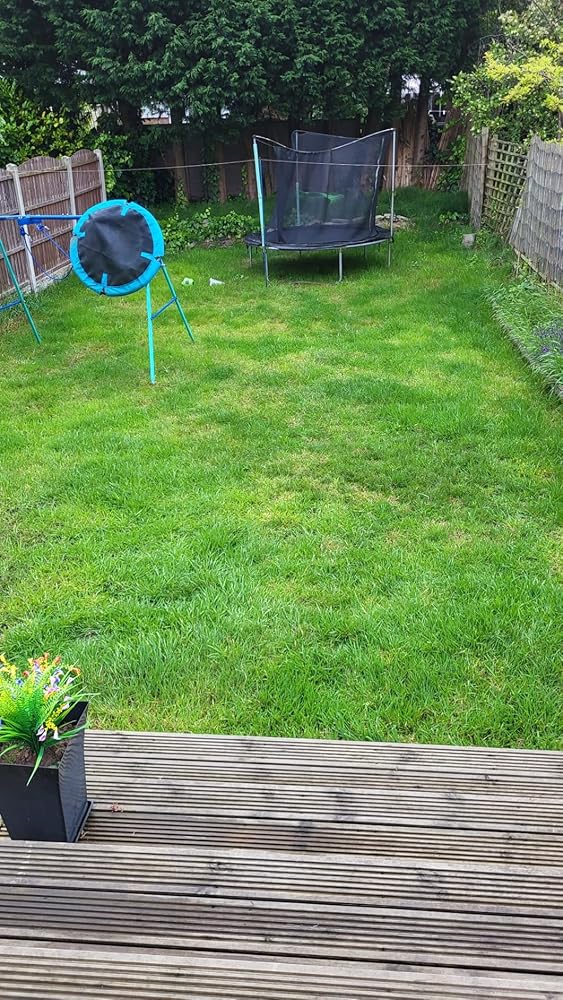
Pics 2 and 4 are before seeding, pics 1 and 3 are only 1 week after seeding. Can clearly see much more lush thicker grass coming. Would buy again. My only negative is I feel the coverage could be exaggerated
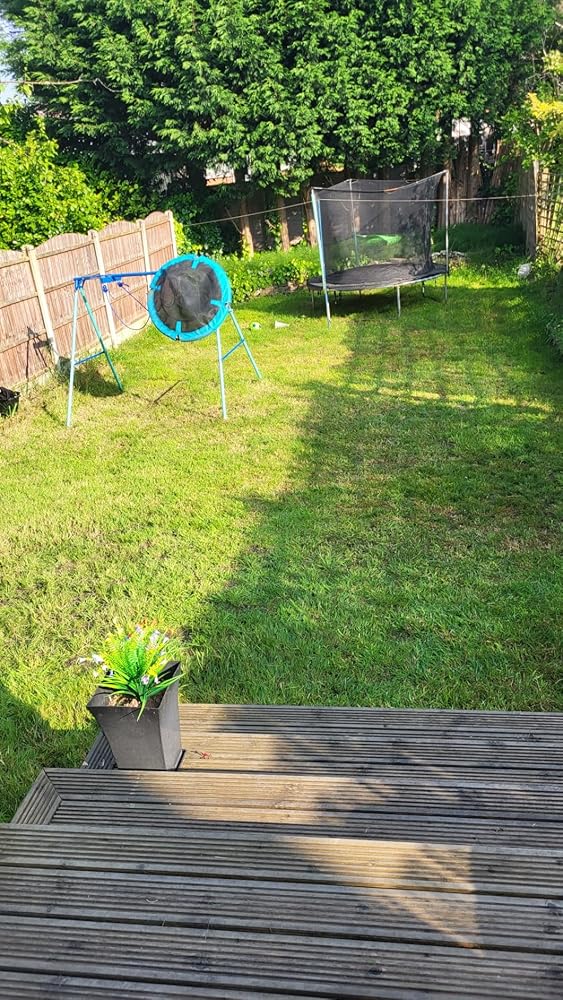
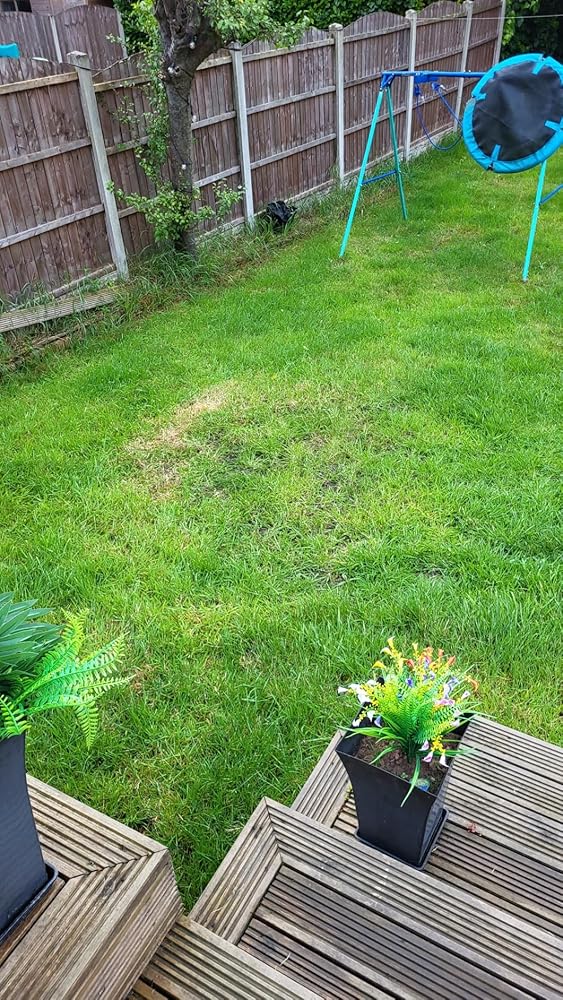
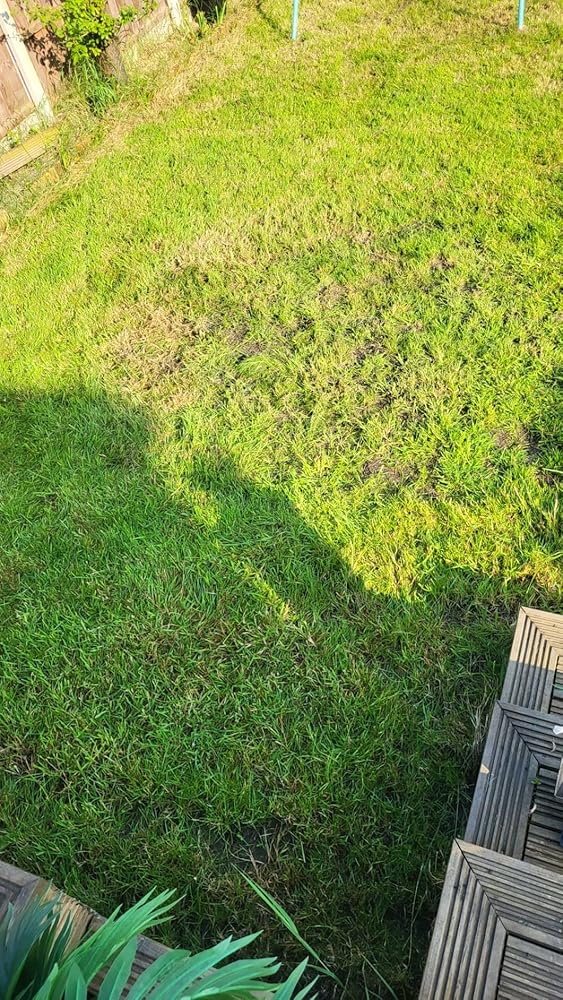
Easy to use straight from the bag
At the time of this review, you can get this bag of autumn grass fertiliser for around £30 The packet says you can use this to treat up to 100 m² The packaging does say this is the professional grade lawn fertiliser and to avoid over application because using too much because me is damaging is not doing anything I put this on using a hand spreader. It’s ideal for using this product from September onwards. If there’s no rain within two days of putting it down, you’ll have to get to the hose out and water it in and avoid mowing for three days to allow to be fully absorbed into the soil and not hoovered up by your lawn lawnmower. It takes a couple of weeks to see the result. I did a test patch on mine and I’ve attached a video. If you’re thinking about buying some of this product, I would recommend it. I wouldn’t say it was cheap, but a little does go a long way. I hope the video in this review is helpful
Great stuff, greens up lovely and thickens the lawn
The Autumn Guard Pro fertiliser is very easy to apply with a spreader and works perfectly. Within just a week, I noticed a clear improvement in the colour and health of my lawn. It’s long-lasting, feeding the lawn continuously for up to 3 months (according to the product description). However, it doesn't seem to kill the moss which is a common issue with autumn lawn care. It is priced at £29.99 for a 2.5kg pack, which I think is reasonable considering the quality.
Excellent lawn fertilizer for autumn application. I've used previously and found really effective. Appearance of grass greens up and doesn't encourage too much growth.I normally apply using our push spreader.A bit on the expensive side though.
After all the dry weather we’ve had this summer, the grass on the lawn has become very patchy, with areas so bad there is hardly any grass left.I was really pleased to have the opportunity to try out this product which is designed to revive the lawn and protect it over the winter months.More importantly, we have grandchildren and cats and needed something that is both child and pet friendly which this one is.It was relatively easy to work out how much to use and how to apply as the instructions on the pack are very clear. The weather has now turned to rain so I have not had to water the lawn. I am quite impressed at how quickly after application, the patchy areas on the lawn are progressively disappearing. It will probably require more attention in the next few weeks although it is not advisable to use more than recommended.At just under £30, it is not the cheapest out there, but this is a non toxic formula.
I'm absolutely thrilled to see a professional-grade lawn fertiliser made accessible in this manner - built for the rough autumn and winter months, where lawns are the most forgotten about. I'll admit my lawn game this year has been awful. As you can see, after mowing my lawn, it's currently in a horrible mess from my lack of time to aerate, scarify and overseed this year. Nevertheless, I'm confident I can get the roots back to their best.This fertiliser is thankfully accessible for the general user. I followed the clear, simple instructions behind to calculate the m2 of my lawn, measure out the necessary 25g x lawn area fertiliser amount out to then sprinkle over the lawn. The fertiliser itself brings immense promise. The beautiful, colourful blend explains being a slow-release mix of nitrogen, iron and magnesium. The blend aims to provide enough nutrition to strengthen roots for the harsh winter and produce thicker, denser and vibrant grass. It's mentioned that one treatment lasts 10-12 weeks (3 months).The instructions mention two methods to applying this, using a spreader or, more usefully for someone with a small lawn like me, by hand! I was grateful to know this was official enough to do, and I set out on my way to equally scatter 425grams across my entire lawn patch.It's now set in place, and I'm waiting for some rainfall! I will share results as I see a difference!
Pics 2 and 4 are before seeding, pics 1 and 3 are only 1 week after seeding. Can clearly see much more lush thicker grass coming. Would buy again. My only negative is I feel the coverage could be exaggerated
Join Thousands of Homeowners and Transform Your Lawn
A lush, green lawn isn’t out of reach. With our expert-formulated fertilisers, you’ll achieve professional results you can be proud of – just like these homeowners have.


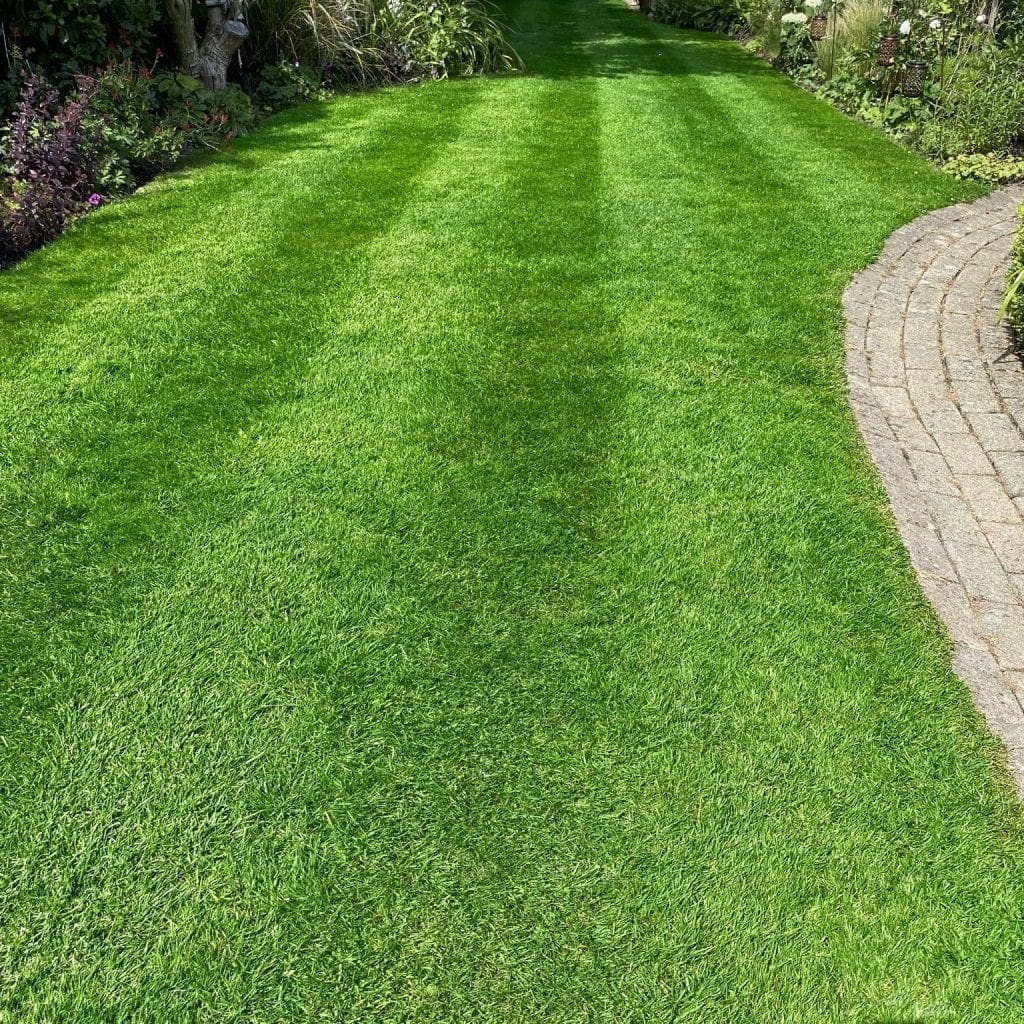
Our customers tell it better than we do!
GET STARTED →Why choose Johnson Lawn Care Direct?
-

Green-Up Guarantee
We’re confident you’ll see a real improvement fast. If your lawn doesn’t start greening within 14 days, we’ll refund you. No fuss, no hoops – just results.
-

Child & Pet Safe
No need to stay off the grass. Our fertilisers are safe for children & pets to walk on once your lawn is watered in and dry – so the lawn can keep looking its best without interrupting family life.
-

Expertly Formulated Blends
Our exclusive lawn fertilisers are developed in-house by seasoned lawn care professionals, delivering the precise nutrients your lawn needs for stunning, pitch-quality results.
-

Seasonal Precision
Your lawn receives perfectly timed treatments tailored for each season, ensuring vibrant, lasting growth from spring through winter.
-
Professional-Grade Quality
We use the same top-tier ingredients trusted by lawn care experts, so you enjoy results that outshine the neighbours - every time.
-

Effortless Seasonal Subscriptions
Receive seasonally balanced fertilisers every 12 weeks. Over time, you’ll see a healthier, denser lawn that not only looks incredible today, but grows stronger and more resilient season after season.


