


A green lawn in January is not a matter of luck; it is the result of a calculated nutritional strategy designed to withstand the British winter. If you are wondering how to protect lawn from frost UK, the answer lies in building internal cellular strength before the first hard freeze arrives. You have likely felt that sinking feeling when a crisp morning reveals patches of brown or black grass where a lush lawn once stood. It is frustrating to watch moss gain a foothold whilst your grass struggles to cope with the damp and cold.
This guide explains how to fortify your grass against freezing temperatures using professional potassium nutrition and expert winter maintenance techniques. You will discover how specific NPK ratios, such as the 5-0-10 found in Winter Shield Pro, provide the strength required to stay green through the coldest months. We will explore the science of winter hardening and the practical steps you can take to prevent moss and frost heave from damaging your garden.
Key Takeaways
- Understand how freezing water inside grass blades causes cell rupture and why avoiding foot traffic on frozen turf is the first step in how to protect lawn from frost UK.
- Learn how potassium acts as a cellular regulator; thickening cell walls to create a natural antifreeze effect that prevents ice crystals from shattering the plant.
- Discover why the 5-0-10 ratio of Winter Shield Pro is the professional standard for building winter hardiness whilst suppressing moss with 5% iron.
- Master the timing of your final seasonal feed; applying granular nutrition at 25 grams per square metre to activate with winter moisture.
- See how integrating frost protection into the year-round Lawn Envy System ensures your grass has the energy reserves to remain green through January.
Understanding the Impact of Frost on UK Lawns
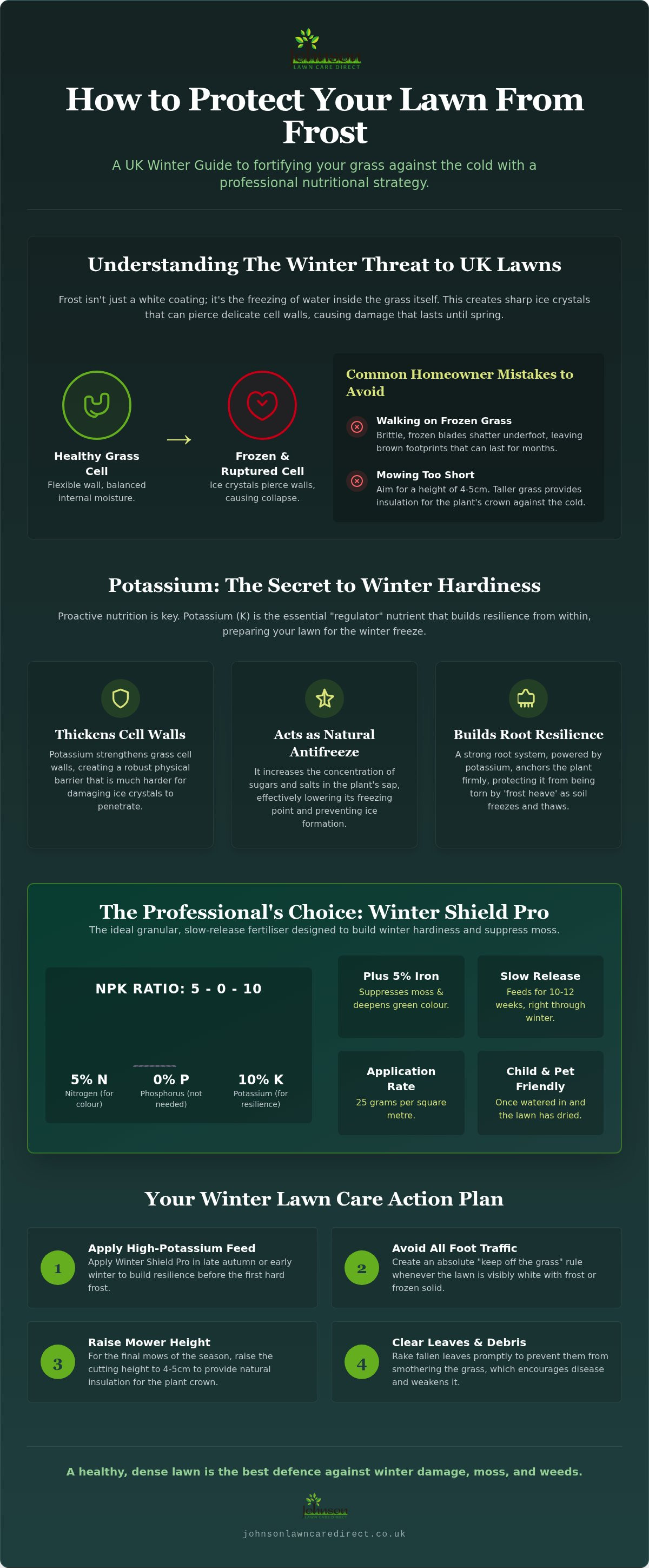
Frost occurs when the temperature of the grass surface drops below freezing, causing moisture in the air to condense and turn to ice. In the UK, our high humidity levels mean that frost is a frequent visitor from November through to March. Understanding what frost is and how it damages plants is the first step in maintaining a healthy garden. It is not just the visible white coating on the blades that matters; frost involves the freezing of water within the grass plant itself and inside the soil pores. This internal freezing creates physical stress that can compromise the lawn for the entire following season.
The Biology of a Frozen Lawn
When temperatures plummet, ice crystals form inside the grass cells. These sharp crystals can pierce the delicate cell walls from the inside. You will often see the results after the thaw; the lawn may look limp or develop dark brown and black patches. This is essentially cellular collapse. Because grass enters a state of dormancy during winter, its metabolism slows down significantly. This means recovery is a slow process; the lawn cannot simply grow out of the damage until the soil warms up in spring. Protecting the plant at a cellular level is therefore essential for maintaining winter colour.
Common Winter Mistakes for Homeowners
One of the most damaging actions a homeowner can take is walking on frozen grass. When the blades are frozen, they lose their flexibility and become brittle. Stepping on them shatters the frozen cell walls instantly, leading to leaf bruising. This often leaves permanent brown footprints that remain visible for months. If you are researching how to protect lawn from frost UK, your first priority should be restricted access during icy periods. Another common error is mowing the grass too short as winter approaches. You should aim for a height of 4 to 5cm in late winter; this extra length provides a small amount of insulation for the crown of the plant. Finally, many people neglect nutrition, leaving the lawn weak and susceptible to disease.
The Challenge of Frost Heave
The UK climate is particularly challenging because temperatures often fluctuate above and below freezing within a single day. This causes frost heave, where the moisture in the soil freezes and expands, physically lifting the soil surface. This movement can tear the roots away from their moisture source; leaving the grass dehydrated even in wet weather. A healthy, dense lawn with a strong root system is your best defence against this mechanical stress. By understanding how to protect lawn from frost UK through both physical care and nutritional support, you can ensure your grass remains resilient against these shifting conditions.
Why Potassium Lawn Feed for Winter is Essential
While many gardeners focus on passive protection, such as avoiding the lawn during a freeze, professional results require a proactive nutritional approach. Potassium is the silent engine of winter survival. In the world of horticulture, it is often described as the "regulator" because of its vital role in controlling water movement and nutrient transport. When you consider how to protect lawn from frost UK, you must look beyond the surface and focus on the internal chemistry of the grass plant. Proactive feeding ensures the plant is not just surviving the cold but actively resisting its damaging effects.
The Role of Potassium in Cellular Strength
Potassium is responsible for regulating the opening and closing of stomata, the tiny pores on the leaf surface. This control is essential for maintaining water balance during the drying winds of a British winter. At a cellular level, potassium facilitates the thickening of cell walls; creating a physical barrier that is much harder for ice crystals to penetrate. High levels of potassium also increase the concentration of salts and sugars within the plant sap. This process effectively lowers the freezing point of the liquid inside the cells, acting like a natural antifreeze. Potassium is the primary nutrient for winter resilience and disease resistance.
Building Root Resilience Before the Big Freeze
During the cooler months, the grass plant shifts its energy away from lush top growth and towards the root system. This is a critical phase of the seasonal cycle. Whilst the leaves may appear dormant, a healthy lawn is busy building a dense network of roots beneath the surface. A high-potassium feed during this period ensures the roots are strong enough to withstand the mechanical stress of frost heave. When the soil expands and contracts during the typical UK freeze-thaw cycle, weak roots can be snapped or detached from their moisture source. Strengthening these foundations is a key part of the Lawn Envy System, ensuring your grass remains anchored and healthy.
Professional greenkeepers prioritise "winter hardiness" as a specific goal. This involves preparing the turf to survive not just the cold, but also the damp, low-light conditions that encourage moss and fungal pathogens. By following Practical Steps to Protect Your Lawn and combining them with targeted potassium nutrition, you move from merely hoping your lawn survives to ensuring it thrives. This nutritional hardening makes the grass less susceptible to Snow Mould and Fusarium; these are common winter diseases that often strike weakened turf during January and February.
Choosing the Best Potassium Lawn Feed for Winter
Selecting a winter feed requires a departure from the growth-focused strategies of spring and summer. In the UK, applying a fertiliser with high nitrogen during the dormant months is a strategic error. It encourages soft, lush growth that is highly vulnerable to freezing temperatures. When considering how to protect lawn from frost UK, the focus must shift towards a product that prioritises cellular integrity and root strength. Winter Shield Pro is formulated as a professional choice for this period; providing a granular, slow-release solution that supports the plant through the harshest conditions without forcing unnecessary top growth.
Professional turf managers look for specific NPK ratios that align with the metabolic state of the grass. Following RHS advice on autumn lawn care provides a foundation for hardiness; however, as you move into the depths of winter, the nutritional requirements become even more specialised. The objective is to provide enough nitrogen to maintain health and colour without disrupting the natural dormancy of the plant. Unlike liquid feeds that can be washed away by heavy rain, a granular, slow-release fertiliser remains in the soil; activating with warmth and moisture to provide consistent nutrition over 10 to 12 weeks.
Decoding the NPK Ratio: 5-0-10
The 5-0-10 ratio of Winter Shield Pro is designed for precision. The 5% nitrogen provides just enough energy to maintain a healthy green colour without stimulating the vertical growth that frost easily damages. This is balanced by 10% potassium, which is the critical component for internal protection and root health. For standard seasonal feeding, the product is applied at 25 grams per square metre. This controlled application ensures the grass has the resilience to withstand the freeze-thaw cycles common in the British climate; protecting the plant from the inside out.
The Added Benefit of 5% Iron
Damp UK winters often create the ideal environment for moss to thrive, especially when grass growth slowed. The inclusion of 5% iron in your winter feed serves two vital purposes. Firstly, it provides a deep, aesthetic green colour without the risk of growth surges. Secondly, it hardens the turf against common winter diseases such as Fusarium. Whilst the standard application rate supports general health, a higher rate of 35 to 40 grams per square metre can be used if you need active moss control. This dual approach ensures your lawn remains dense and healthy; which is the primary defence against unwanted moss and weeds during the colder months. When considering how to protect lawn from frost UK, this combination of potassium and iron offers the most reliable protection available to the homeowner.
Practical Steps to Protect Your Lawn from Frost
Implementing a strategy for how to protect lawn from frost UK requires precise timing and a commitment to gentle maintenance. The most effective window for applying your final seasonal feed is typically early December; provided the ground is not already frozen. Applying granular nutrition to frozen soil is ineffective as the granules cannot reach the root zone where they are needed. Instead, monitor the local weather forecast and aim to apply your fertiliser ahead of expected rain. This natural moisture helps the granules settle into the soil profile and begin the slow-release process. If rain is not forecast, you must water the feed in manually within 48 hours to ensure the nutrients are available to the roots before a deep freeze sets in.
Timing Your Winter Nutrition
Winter Shield Pro is formulated to last between 10 to 12 weeks; providing consistent support throughout the darkest months. These granular feeds activate with warmth and moisture rather than following a rigid calendar date. For the most professional results, use a fertiliser spreader to ensure an even distribution of 25 grams per square metre. Hand-casting often leads to uneven patches where some areas are over-fed whilst others remain vulnerable to the cold. Once the granules have been watered in and the grass is dry, the lawn remains child and pet friendly. This methodical approach ensures that the potassium is evenly distributed; allowing every individual plant to build the cellular resilience required to survive.
Winter Mowing and Maintenance
Adjusting your mower settings is a simple yet vital part of winter care. You should maintain a higher mowing height of 4 to 5cm throughout the colder months. These longer blades act as a natural insulation layer for the soil and the plant crown; effectively trapping a small amount of warmth and reducing the impact of sharp temperature drops. Always follow the one-third rule by never removing more than a third of the grass height in a single session. This prevents stressing the plant when its recovery rate is at its lowest. Avoid heavy maintenance tasks such as scarifying or aerating during this period. These disruptive tasks should be reserved for spring or autumn when the grass is actively growing and can quickly repair itself. Finally, the most basic rule remains the most important; keep off the grass during frosty mornings until the ice has completely melted to avoid shattering the leaf cells.
Long-Term Resilience with the Lawn Envy System
Understanding how to protect lawn from frost UK involves more than just a single application of fertiliser in December. True resilience is built through a consistent, year-round approach known as the Lawn Envy System. When you feed your grass correctly during the growing season, you allow the plant to accumulate energy reserves in its roots and crown. These carbohydrate stores are essential for surviving the dormant months. A lawn that has been nurtured through spring and summer is naturally better equipped to withstand the stresses of freezing temperatures and damp conditions.
The Benefits of a Seasonal Programme
Success in winter is often determined by the preparation done in the preceding months. Applying Autumn Guard Pro (17-5-20) sets the stage by providing high levels of potassium to strengthen cell walls before the first frost arrives. As the season turns, this protection is maintained by Winter Shield Pro. Once the soil begins to warm in March, the programme transitions to Spring Surge Pro (17-5-8). This 17-5-8 NPK ratio provides the necessary boost to kickstart growth after the winter slumber. Maintaining this cycle ensures your lawn remains dense and healthy; which is your primary defence against moss and winter weeds.
A thick sward leaves no room for opportunistic weeds to take hold. Whilst products like Weedol can help manage existing outbreaks, a healthy lawn acts as a living carpet that naturally suppresses competition. By following a structured feeding programme, you ensure that the grass is always the dominant species in your garden. This systematic approach removes the guesswork and provides the peace of mind that comes from professional-standard care.
Expert Support for Your Garden
Managing a lawn through the changing British seasons can feel complex, but the subscription system simplifies the process by delivering the right granular, slow-release feed exactly when your lawn needs it. Each feed is applied at 25 grams per square metre and lasts between 10 to 12 weeks. To support your journey, the Lawn Envy Masterclass provides in-depth guidance on mastering winter care and beyond. Understanding how to protect lawn from frost UK is a foundational skill taught within this educational programme. You also benefit from a Personalised Lawn Envy Plan for bespoke advice tailored to your specific garden conditions.
This commitment to quality is backed by a green-up guarantee; ensuring you achieve the high-standard results you desire. All products are child and pet friendly once they have been watered in and the lawn has dried. By integrating potassium-rich nutrition into your regular routine, you build a lawn that is not just surviving the winter but is ready to thrive come spring. Prepare your garden now before the first hard frost arrives to ensure your grass stays green and resilient throughout the year.
Prepare Your Lawn for a Resilient Winter
Maintaining a vibrant, healthy garden through the coldest months is entirely achievable with the right professional strategy. By prioritising potassium nutrition and adjusting your maintenance habits, you prevent the cellular damage and moss encroachment that often follow a hard freeze. Mastering how to protect lawn from frost UK involves a combination of structural care and the precise nutrition provided by professional-grade slow-release granular feeds.
As the recipient of the award for Wiltshire’s Best Lawn Care Company 2026, we understand that a resilient lawn is a year-round commitment. Using Winter Shield Pro ensures your grass remains strong and green whilst remaining child and pet friendly once watered in and dried. This proactive approach gives you the confidence that your lawn will emerge from dormancy in peak condition.
Take the first step today towards a garden that remains a source of pride throughout the entire winter season.
Frequently Asked Questions
Can I apply winter fertiliser to a frozen lawn?
No; you should never apply granular fertiliser whilst the ground is frozen. The granules will sit on the surface and cannot reach the root zone where they are required. Wait for the ground to thaw completely before application to ensure the nutrients can be absorbed by the soil once moisture is present.
Why is potassium so important for grass in the winter?
Potassium acts as a cellular regulator that thickens the cell walls of the grass plant. This internal strengthening is a key part of how to protect lawn from frost UK as it prevents ice crystals from rupturing the cells. It also lowers the freezing point of the plant sap; providing a natural antifreeze effect during the coldest months.
How much Winter Shield Pro should I apply per square metre?
The standard application rate for Winter Shield Pro is 25 grams per square metre. This provides consistent nutrition for 10 to 12 weeks. If you are dealing with a significant moss problem; you can increase this rate to 35 or 40 grams per square metre to utilise the 5% iron content more effectively.
Is it safe for pets to go on the lawn after a winter feed?
Yes; our granular fertilisers are child and pet friendly. You must water the feed in thoroughly and allow the grass to dry completely before allowing pets or children back onto the treated area. This ensures the granules have begun to break down and settle into the soil profile.
Will frost kill my grass if I walk on it?
Walking on frosty grass causes physical damage known as leaf bruising but rarely kills the entire plant. The frozen blades are brittle and snap under pressure; shattering the cell walls. This results in unsightly black or brown footprints that may not disappear until the grass begins active growth again in the spring.
What is the best NPK ratio for a winter lawn feed in the UK?
A professional winter feed should have low nitrogen and high potassium; such as the 5-0-10 ratio found in Winter Shield Pro. Low nitrogen prevents soft; vulnerable growth whilst the 10% potassium builds the hardiness required for the British climate. This specific balance is essential for how to protect lawn from frost UK effectively.
Do I need to water in my winter fertiliser if it is cold?
Yes; all granular fertilisers except Summer Boost Pro must be watered in within a couple of days of application. If rain is not forecast; you should use a sprinkler to activate the feed. Moisture is required to move the nutrients from the granule into the soil so the roots can access them.
Can I mow my lawn during a frost?
You should avoid mowing the lawn whenever frost is present or the ground is frozen. Mowing brittle; frozen blades causes significant structural damage and can lead to disease. Wait until the frost has melted and the grass has dried before considering a light trim; ensuring you never remove more than one-third of the height.
Disclaimer
The guides in our Lawn Care Library offer general lawn care information for UK homeowners. Every lawn is different, and factors such as soil, grass type, aspect and local conditions all affect what yours needs. For advice tailored specifically to your own lawn, take a look at our Personalised Lawn Envy Plan, or get in touch and we will be glad to help.


