


How to choose the right fertiliser spreader, and set it to 25 g/m²
Spreaders fall into two types, and only one is right for fertiliser. Here is how to pick the right one, and two simple ways to calibrate yours to an even...


Professional Lawn Fertiliser
Couldn't load pickup availability
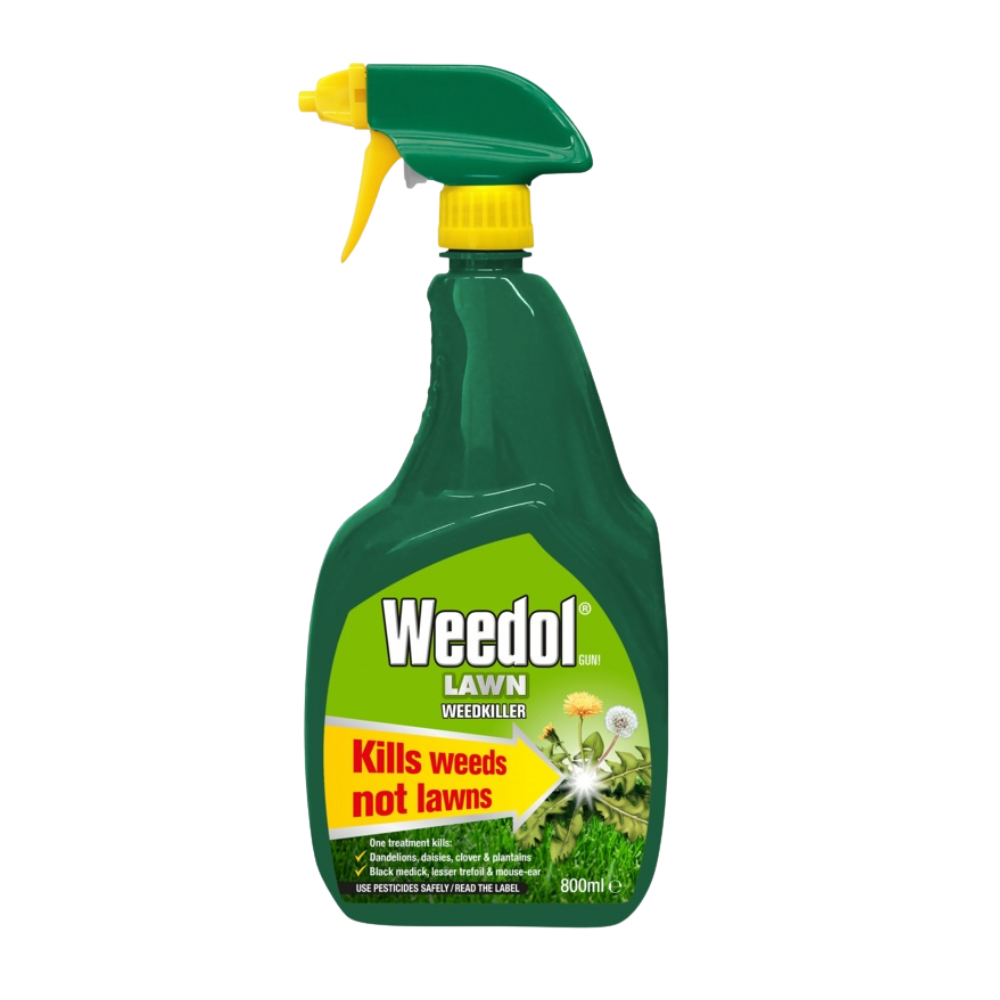
Treat weeds exactly where they grow with a ready to use spray that targets the most common broad-leaved lawn weeds and kills them down to the root, so they do not simply grow back. As a standalone spot treatment, it lets you clear weeds while continuing to feed your lawn with full-strength seasonal fertiliser, rather than relying on a combined weed and feed that compromises the nutrition your lawn needs.
✅ Easy to apply spot treatment : spray directly onto the weeds you want to treat, with no mixing or measuring
🌱 Kills weeds, not your lawn : the selective formula clears broad-leaved weeds while leaving your grass unharmed
🌼 Targets common lawn weeds : controls clover, daisy, dandelion, plantain, common chickweed and many other broad-leaved weeds
🐾 Child and pet friendly (once dry) : children and pets can return to the treated area once the spray has dried
📅 Apply from April to September : works best on young weeds while they are small and actively growing
💧 Fits your seasonal feeding programme : treat weeds separately and keep feeding with full-strength fertiliser, with no need for a compromised weed and feed
Same Day Despatch
Order before 3pm (Mon–Fri) for same-day despatch. All orders are shipped using a tracked 24-48 hr service.
Delivery
• Free delivery on all orders up to 25kg. Most arrive next day, but please leave up to 48 hours.
• 25kg bags: £7.99 delivery via a 24-48 hour tracked service.
Returns
Changed your mind? No problem. You can return unopened, unused items within 14 days. Just contact us to get started. Return postage is not included.
➡️ View our Returns & Refunds Policy
Green-Up Guarantee
We’re so confident in our fertiliser, we guarantee visible improvement within 14 days when applied as directed. If not, we’ll give you a refund or store credit towards your next purchase. Conditions apply. Click below for full details.


Every lawn is different. Soil, shade, patches, moss, weeds, drainage, wear from children and dogs, and how much time you can give it all change what your lawn actually needs. The Personalised Lawn Care Plan is my expert analysis of your lawn. You answer a short questionnaire and send photographs, and I personally review them and write you a step-by-step plan for the whole year setting out exactly what to do, when to do it, in what order, and why.
Your plan is delivered digitally or as a personalised printed book and includes lifetime access to the Lawn Envy Masterclass, our nine-module course, as the supporting library behind each recommendation. It is the same diagnostic approach behind our seven years as the region's best lawn care company, applied to your lawn.

Award Winning Family Business

Made in Britain
How Much Do I Need?
All our fertilisers are designed to be applied at 25g per m² — the perfect rate for professional results without the risk of overfeeding.
You might be used to heavier application rates with DIY products, but our formulas are concentrated, so a little really does go a long way.
To work out how much you need:
Bag coverage guide:
Stick to 25g per m² and you’ll see fast, safe, and visible improvement.
How to Apply?
Follow these simple steps for best results:
For further detailed instructions, see our How to Apply Lawn Fertiliser Guide
Ingredients and How They Help My Lawn
Every lawn feed we create is designed with purpose — to give your grass exactly what it needs, when it needs it. Each blend in our range uses a carefully balanced mix of nutrients to boost colour, strengthen roots, build resilience and improve overall lawn health.
Our seasonal fertilisers are also formulated to work in harmony across the year — each one building on the last. When used together, they deliver the perfect balance of nutrition to keep your lawn looking its best in every season.
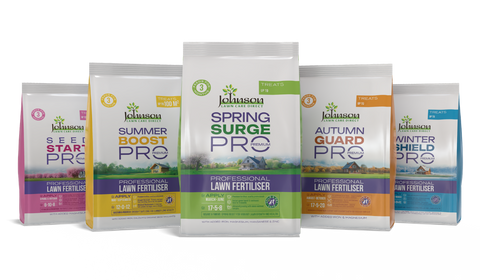 Johnson Lawn Care DirectProfessional-Grade Fertilisers
 Standard Retail Lawn FeedsDomestic-Grade Fertilisers
Four formulas, one for each season
One bag covering two seasons
Professional-grade nutrient sources
Standard-grade nutrient sources
Up to three times the key nutrients
Low levels of the key nutrients
Added Micronutrients & Biostimulants
Rarely include micronutrients or biostimulants
Advanced coating, releases with heat and moisture
Basic coating, releases at a fixed rate
Feeds for up to 3 months
Feeds for 4 to 6 weeks
Summer feed goes down without watering in and will not scorch
Needs watering in, or the lawn scorches
Formulated and supported by RHS-trained lawn care professionals
No expert advice or support
Proudly Made in Britain, to our own formulation
Often white-label products made abroad
Your lawn wants different things in March, June, September and December, so we give it four different feeds. Spring pushes growth and colour, summer holds it through heat and drought, autumn builds the roots that carry it through winter, and winter hardens the grass and works on moss. The nutrients change because the job changes. You never have to work out what your lawn needs next; the bag that arrives is the right one.
A "spring and summer" feed treats a lawn bursting out of dormancy in April the same as a lawn that is brown on top and fighting for its life in a July drought. Those are two different problems, and one bag cannot solve both. Push growth when the lawn is already stressed and you weaken it further. Nothing in the bag is built for drought, for moss, or for winter. It is guesswork, with the lawn paying for the mistakes.
Two bags can carry the same numbers on the label and give completely different results, because the grade of the raw ingredient decides how much of that number the grass actually receives. Ours are the trade-grade sources used in professional lawn care: purer, more consistent, and in a form the grass takes up readily. The nutrient value on the label is what reaches the roots, every application, so the response is full and it is the same every time.
White-label feeds are built to a price, and the grade of the nutrient source is where the saving is made. Lower-grade sources are less pure and less consistent, and less of what is in the bag is in a form the grass can take up. The response is weaker than the packaging suggests, and it varies from bag to bag. The number on the label is not the number your lawn gets.
Nitrogen, phosphorus and potassium are the three nutrients that build a lawn, and the most expensive to put in a bag. Ours carry them at professional rates, up to three times the concentration of a typical retail feed. Our spring feed is 17% nitrogen, for example, against 5% or 6% in most retail equivalents. At these rates nitrogen thickens the sward and holds its colour, phosphorus drives the roots down, and potassium hardens the grass against drought, cold and disease. The difference shows within weeks, is still there at the end of the season, and the lawn starts the next season ahead instead of from zero.
Nitrogen, phosphorus and potassium are the costly part of a fertiliser, so retail feeds keep them low. A small dose of fast-acting nitrogen turns the grass green within days, which looks like the feed has worked. It has not. There is too little behind it to thicken the sward, grow roots or build any resistance, so the colour fades within a few weeks and the lawn is back where it started. Nothing has been built, and the next bag starts from zero.
Nitrogen, phosphorus and potassium make a lawn grow. The added ingredients decide how well it uses them, and how it looks. Iron deepens the colour and hardens the grass. Magnesium and manganese are essential to making chlorophyll; short of either, a lawn stays pale however much feed goes on. Calcium strengthens the grass at a cellular level. Zinc drives the enzymes behind growth, and ours is chelated, the form roots take up readily. The biostimulant helps the grass take up and hold water, so it stays greener for longer. We added them because when we soil-tested our own clients' lawns, all of them already on professional trade feeds, the same deficiencies came up again and again. These are what separate a good lawn from a stunning one.
These ingredients are expensive, and none of them gives the fast, visible change that nitrogen does, so a bag built to a price leaves them out. The lawn hits a ceiling: fed, green enough, and never any better than that, because it is short of something the main nutrients cannot replace. The deficiency cannot be seen; it only shows in a soil test, and most lawns are never tested. The lawn stays average and nobody knows why.
Feeds your lawn when it is growing, not when you happen to spread it. The coating opens with warmth and moisture and closes when the soil turns cold or dry, so the release speeds up and slows down with the weather, week by week. You do not have to time it to the forecast; put it down in season and the granule does the rest. Nothing is released while the grass cannot use it, and nothing is held back while it can, so the whole bag goes into growth and the growth is even. It is the coating technology developed for professional golf greens, and it costs considerably more to make.
Releases nutrients to a fixed schedule whatever the weather is doing. In a cold or dry spell, when the grass has stopped growing, the feed carries on releasing into soil the roots are not drawing from, and much of it is gone before growth returns. In a warm, wet spell, when the grass could take far more, it gets the same slow trickle and growth stalls. Part of the bag is wasted, and the lawn is fed least in the weeks it could grow most.
One application feeds for 10 to 12 weeks, so four feeds cover the whole year with no gap between them. The lawn is fed continuously, and that is what changes it: each season builds on the last instead of starting again, which is how a lawn gets thicker and stronger year on year rather than going round in circles. Four afternoons a year, no calendar to keep. Bag for bag ours costs more; over the year it costs less, because a feed that lasts two to three times as long needs buying and spreading a third as often.
A feed that lasts four to six weeks would need applying eight to twelve times a year to keep a lawn fed. Nobody does that. What happens instead is feed, fade, and a gap of weeks or months before the next bag, so the lawn is unfed for most of the year and whatever the last feed built is gone before the next one starts. To match a three-month feed you buy and spread it two to three times as often. Over the same period that costs around 20% more, for a lawn that spent most of it unfed.
British summers are hotter and drier than the feeds most people use were designed for. A granular feed has always needed watering in, and in a dry summer, on a large lawn, or under a hosepipe ban, that is often impossible, so the lawn goes unfed through the hardest season of the year. Our summer feed was built for the summer we now have. Its drought-safe coating means it goes down without watering in and will not scorch, even on a dry, brown lawn. It waits, releasing only when moisture and temperature allow, so when the rain returns the feed is already there and the lawn greens up quickly, ahead of any lawn that spent the summer unfed. A lawn needs feeding all year round, whatever the weather does, and a feed that can do that costs more to make.
Standard feeds need watering in within a few days, or they sit on the surface and scorch the grass. In a dry summer that leaves two choices: water the whole lawn by hand, which is not possible on a large lawn or under a hosepipe ban, or leave it. Most people leave it. The lawn faces the hottest, driest weeks of the year with nothing behind it, and when the rain returns it recovers slowly and comes back thinner. The season the lawn needs the most help is the one it gets none.
Our feeds were formulated by RHS-trained lawn care professionals who still treat private clients' lawns every week, and the people who made them are the people you speak to. Feeding a lawn raises questions: whether a brown patch is dormancy or disease, when to feed around scarifying, why one area is slow to respond. Get them wrong and you lose a season. Ask us and the answer comes from someone who has almost certainly dealt with the same thing on a client's lawn this month. We are a family business, and a customer with a stunning lawn is the whole point of it.
A retail feed is sold from a shelf. The instructions on the bag are the only advice you will get, and when the lawn does not respond, or a problem appears, there is nobody to ask. You guess, or search online and find ten answers that disagree. A wrong guess costs a season. How the lawn turns out comes down to what you happened to know already.
Made in Britain, to a formulation we developed ourselves, so we know exactly what is in every bag and why. It is not a generic product with our name printed on it. It also travels a short distance from factory to your door, with a smaller carbon footprint than a bag shipped in from abroad.
Many retail feeds are white-label products: a generic formulation made elsewhere, often abroad, with a brand name printed on the bag. The company selling it did not formulate it and often cannot say what is in it, which is why nobody at the shop can advise you. It has usually travelled a long way to reach the shelf.
Spreaders fall into two types, and only one is right for fertiliser. Here is how to pick the right one, and two simple ways to calibrate yours to an even...

How to calibrate your spreader and evenly apply your fertiliser at the correct rate

A short introduction to your handheld fertiliser spreader to walk you through the settings and how it works
The best results come from using a fertiliser that is formulated specifically for the current season.
Different times of year require different nutrient balances. A one-size-fits-all product cannot provide the same level of targeted support.
Our seasonal range was developed through years of professional lawn care experience and is designed to work as a complete programme throughout the year. When used consistently, it builds stronger roots, more even colour and better resilience.
Apply lawn fertiliser when the grass is actively growing and soil temperatures are above 8°C.
The lawn should be frost-free and not waterlogged. Avoid applying just before heavy downpours. Light rain within 1–2 days is ideal, as it helps move nutrients into the soil.
All Johnson Lawn Care Direct fertilisers are applied at 23–25 grams per square metre.
Although this may not look like a large amount, it is precisely the correct rate for professional-grade fertiliser. More does not mean better. Careful measurement ensures safe, consistent results and helps you get the full benefit from each bag.
If you are unsure of your lawn size, use our online measuring tool before you begin.
As a guide:
Applying more will not improve results and increases the risk of overfeeding. Measuring accurately is key.
For a strong, healthy lawn, fertiliser should be applied every 10–12 weeks using a product designed for the current season.
Lawns have different needs throughout the year. Spring feeding supports recovery and growth, summer feeding helps the lawn cope with heat and stress, autumn feeding strengthens roots, and winter feeding maintains condition during colder months.
Feeding seasonally and consistently is what builds long-term lawn health.
Many customers choose our auto-delivery option so the correct seasonal fertiliser arrives automatically every 3 months. It takes the guesswork out of timing and ensures the lawn is always supported at the right stage of growth. For more information, see our Fertiliser Range.
The safest and most effective way to apply lawn fertiliser is to measure carefully and spread evenly at 23–25g per square metre.
Professional-grade fertilisers are more concentrated than typical shop products. Accuracy is important. Applying more will not improve results and may cause damage.
Using a handheld or broadcast spreader makes it much easier to achieve an even finish. If you do not already have one, our Handheld Fertiliser Spreader is designed specifically to deliver the correct application rate.
When applied correctly and at the right time of year, seasonal feeding produces visible improvement within days.
Yes, but extra care is needed.
Measure the full amount out before you begin and wear gloves. Familiarise yourself with what 25g per square metre looks like, then spread small amounts evenly as you walk to avoid over-application in one area. Uneven hand application is the most common cause of dark patches or scorch.
A spreader provides more consistent results.
The most reliable method is to use a spreader and apply in two passes at right angles to each other.
This helps prevent missed strips and overlapping areas.
Before applying to the whole lawn, you can calibrate your spreader by testing on a measured 10m² area to ensure the correct rate.
Yes. Our Spring, Autumn and Winter fertilisers must be watered in within 1–2 days of application. Watering moves the nutrients into the soil and down to the root zone where they are needed. If left sitting on the leaf during warm or dry conditions, concentrated nutrients can cause the grass to scorch, resulting in brown patches.
Summer Boost Pro works differently.
It contains a technologically advanced moisture-responsive nitrogen coating. Unlike conventional fertilisers that begin releasing immediately, this coating responds to moisture and temperature. Feeding begins only when moisture returns.
This means Summer Boost Pro can safely be applied during dry spells and even during hosepipe bans without the same risk of scorch. When rain arrives, feeding begins naturally.
If you are able to water during dry conditions, results will always be enhanced. However, the formulation is specifically designed to provide greater flexibility and safety during summer stress.
In active growing conditions, you can usually expect visible improvement within 7–10 days.
Cooler temperatures or low moisture may slow visible results slightly. Fertiliser also supports root development beneath the surface, which may not be immediately visible.
Avoid mowing for 1-2 day before application and 2–3 days after application to allow the fertiliser to settle and begin working.
All of our fertilisers are safe for children and pets to walk on once it has been watered in and the grass is dry. We do not recommend grazing pets are allowed to digest the grass for at least 4 weeks. For more information, see our Children & Pet Safety Guide.
Most issues arise from over-application, uneven spreading or incorrect timing.
Measure carefully. Apply evenly. Follow seasonal timing.
Professional-grade fertiliser works extremely well when used correctly. Feeding little and often, in line with the seasons, produces far better long-term results than occasional heavy applications.
That is why our fertilisers are designed as a year-round programme rather than a single treatment.
Join Thousands of Homeowners and Transform Your Lawn
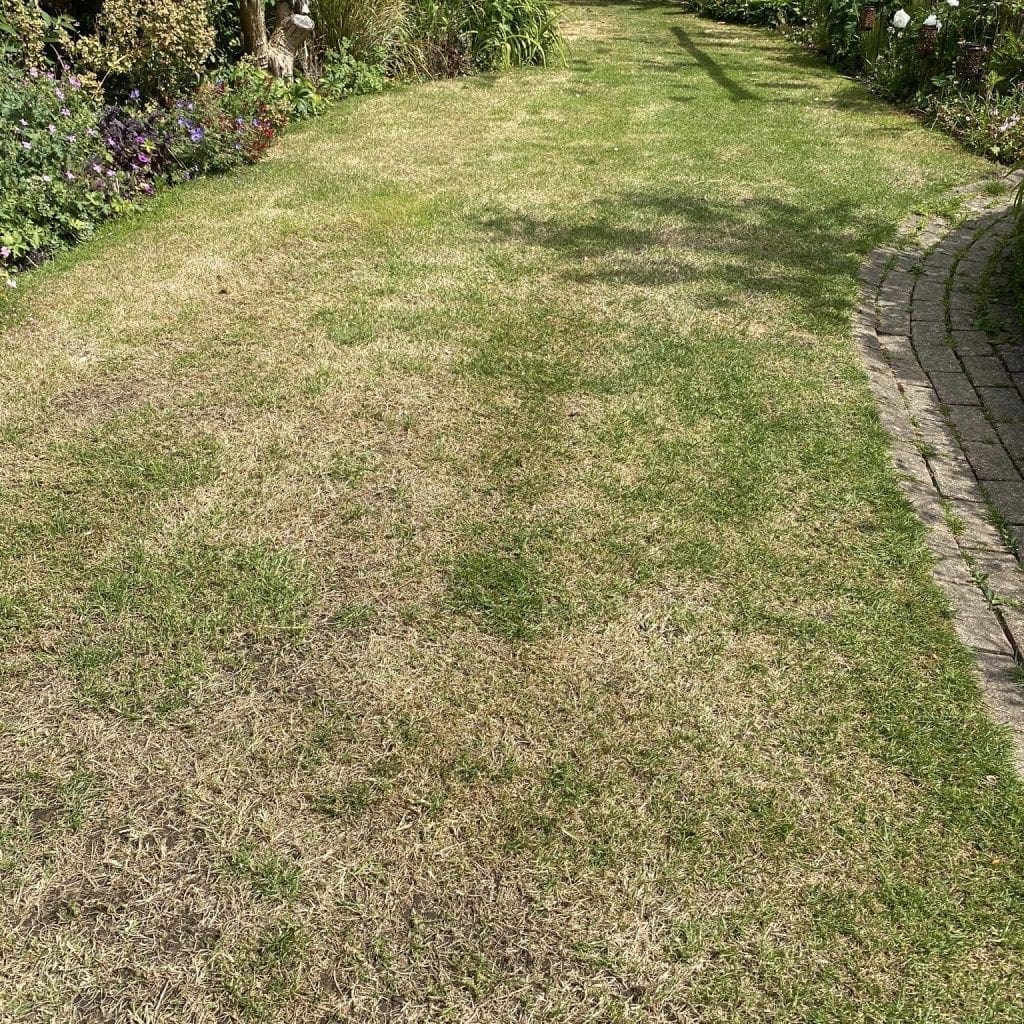
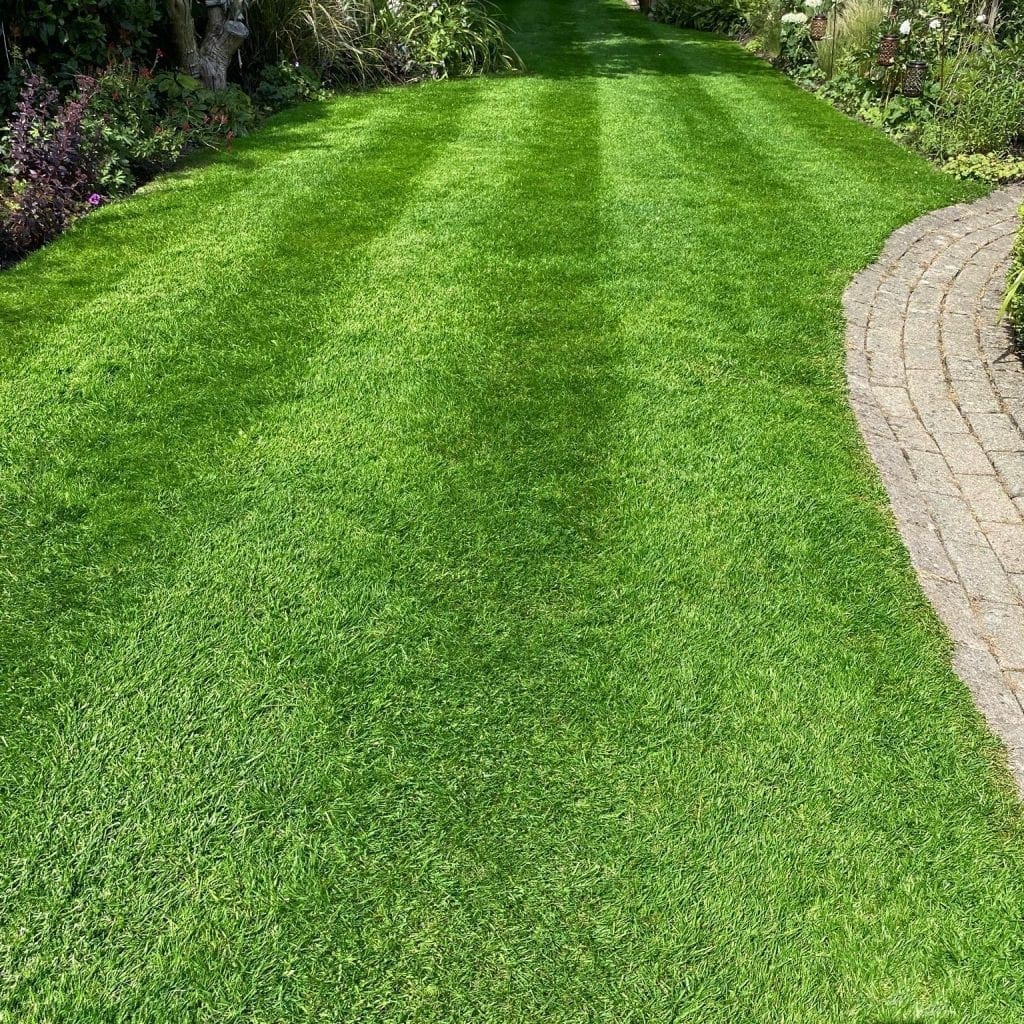
A lush, green lawn isn’t out of reach. With our expert-formulated fertilisers, you’ll achieve professional results you can be proud of – just like these homeowners have.



Green-Up Guarantee
We’re confident you’ll see a real improvement fast. If your lawn doesn’t start greening within 14 days, we’ll refund you. No fuss, no hoops – just results.

Child & Pet Safe
No need to stay off the grass. Our fertilisers are safe for children & pets to walk on once your lawn is watered in and dry – so the lawn can keep looking its best without interrupting family life.

Expertly Formulated Blends
Our exclusive lawn fertilisers are developed in-house by seasoned lawn care professionals, delivering the precise nutrients your lawn needs for stunning, pitch-quality results.

Seasonal Precision
Your lawn receives perfectly timed treatments tailored for each season, ensuring vibrant, lasting growth from spring through winter.
Professional-Grade Quality
We use the same top-tier ingredients trusted by lawn care experts, so you enjoy results that outshine the neighbours - every time.

Effortless Seasonal Subscriptions
Receive seasonally balanced fertilisers every 12 weeks. Over time, you’ll see a healthier, denser lawn that not only looks incredible today, but grows stronger and more resilient season after season.