


What if the secret to a golf-course finish on your new garden isn't a team of professional greenkeepers, but a simple, repeatable system you can master yourself? Many new owners move into their property with visions of vibrant outdoor spaces, only to be met with the reality of patchy growth and encroaching moss. It is common to feel overwhelmed by the technicalities of first time homeowner lawn care UK, especially when you are worried about the timing of seasonal fertilisers or the risk of scorching the grass with professional-grade products.
We believe that every homeowner deserves a thick, dark green lawn that serves as a source of pride and enhances kerb appeal. This guide provides a clear, professional framework for achieving a lush garden through consistent seasonal nutrition and expert maintenance techniques that anyone can follow. You will discover how to synchronise granular feeds with the British weather, master the one-third mowing rule, and build a healthy, dense sward that naturally resists weeds. By the end of this article, you will have a straightforward, repeatable schedule that replaces confusion with confidence.
Key Takeaways
- Master the three pillars of maintenance by prioritising consistent nutrition through a structured feeding programme to build a dense, moss-resistant sward.
- Simplify your first time homeowner lawn care UK journey by understanding how specific NPK ratios provide the precise balance of nitrogen, phosphorus, and potassium your garden requires.
- Learn the professional method for applying granular, slow-release fertilisers at 25 grams per square metre using a spreader for even, streak-free coverage.
- Protect your grass from stress by following the one-third mowing rule and adjusting cutting heights to suit the changing British climate and growth rates.
- Achieve a child and pet friendly garden that stays vibrant for 10 to 12 weeks with feeds that activate with natural warmth and moisture.
The Three Pillars of UK Lawn Care for New Homeowners
Achieving a professional finish on your outdoor space requires more than just enthusiasm; it requires a systematic approach. For those embarking on first time homeowner lawn care UK, success is built upon three fundamental pillars: feeding, mowing, and watering. Whilst the history of lawns shows they have evolved from status symbols to essential domestic relaxation zones, the biological requirements of the grass remain constant. By adopting a professional system, you move away from guesswork and towards a predictable, high-standard result.
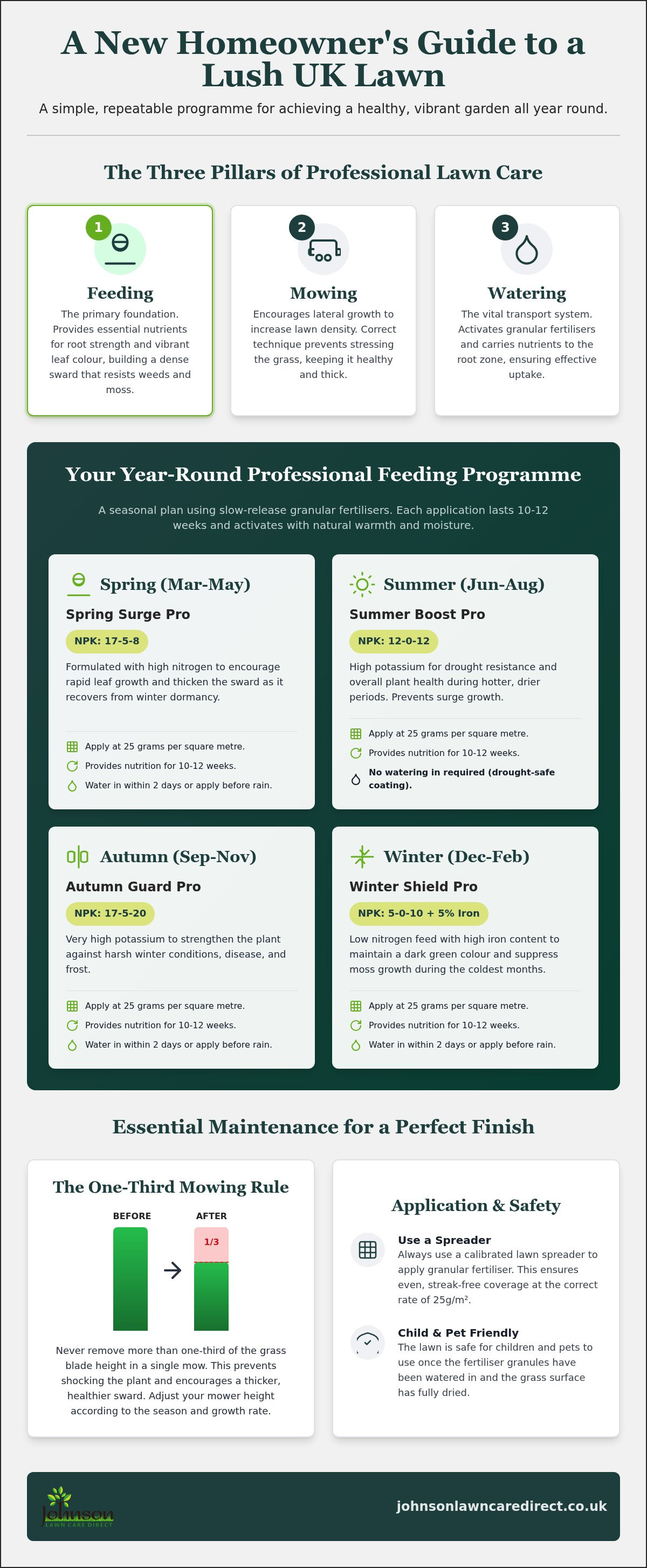
Feeding is the absolute priority in this hierarchy. Without consistent nutrition, grass cannot maintain the strength needed to crowd out competitors. The three pillars work in unison to create a professional finish:
- Feeding: Provides the essential nutrients for root development and leaf health, acting as the primary foundation for growth.
- Mowing: Encourages lateral growth to increase sward density and prevents the grass from becoming stressed or thin.
- Watering: Serves as the vital vehicle for nutrient transport, ensuring fertilisers can reach the root zone effectively.
Why Feeding is the Primary Foundation
Grass is a living plant that consumes nutrients throughout the growing season to maintain its health and vitality. Many beginners make the mistake of using liquid feeds that provide a quick flush of growth but offer no longevity. We recommend high-quality, granular, slow-release feeds that provide a steady stream of nutrition for 10 to 12 weeks. This consistent supply ensures the plant remains strong and the leaf colour stays vibrant without the risk of surge growth. A healthy, dense lawn is your best protection; it creates a natural canopy that prevents weed seeds from reaching the soil and discourages moss from taking hold.
Setting Realistic Expectations for Your Garden
It is vital to understand that a total garden transformation is a seasonal journey rather than an overnight event. British weather and soil conditions vary significantly, from the heavy clays of the Midlands to the sandy soils of the coast. Your lawn will react to warmth and moisture at its own pace, so patience is required whilst the root system establishes. Understanding these variables is a key part of first time homeowner lawn care UK, as it allows you to work with nature rather than against it. For those who want to understand the science behind their soil and grass types in greater detail, The Lawn Envy Masterclass offers comprehensive homeowner education to guide you through every phase of the process.
Understanding Seasonal Nutrition and NPK Ratios
Understanding the chemical requirements of your grass is a significant hurdle for first time homeowner lawn care UK. Whilst many focus solely on irrigation, the biological health of the garden depends on the balance of Nitrogen (N), Phosphorus (P), and Potassium (K). These elements are the building blocks of a healthy, dense lawn, which serves as your primary defence against weeds and moss. Nitrogen drives the lush green colour and leaf growth; Phosphorus supports root development; Potassium strengthens the grass against environmental stress. By prioritising both colour and root strength equally, you create a resilient garden that thrives throughout the year.
Unlike liquid alternatives that provide a fleeting boost, our professional granular fertilisers are designed for longevity. Each application lasts between 10 to 12 weeks, providing a steady release of nutrients that activates when soil warmth and moisture are present. Applying these granular, slow-release feeds at a rate of 25 grams per square metre ensures even coverage and optimal nutrient uptake. To support this nutrition, following Essential Mowing and Watering Techniques ensures the plant can process these nutrients efficiently.
Spring and Summer: Growth and Resilience
As the soil warms in spring, the grass requires a higher concentration of nitrogen to recover from winter dormancy. Spring Surge Pro (17-5-8) is formulated specifically for this phase, encouraging the rapid leaf growth needed to thicken the sward. As we move into the hotter months, the focus shifts to maintaining health during dry spells. Summer Boost Pro (12-0-12) provides the necessary potassium for drought resistance without causing surge growth. It is unique amongst our range as it features a drought-safe coating, making it the only feed that requires no watering in after application. Once the other seasonal granules have been watered in and the grass is dry, all products are child and pet friendly.
Autumn and Winter: Root Strength and Protection
When growth slows in the later months, the priority shifts from the leaf to the root system. Autumn Guard Pro (17-5-20) contains a high ratio of potassium to harden the grass against frost and disease whilst promoting deep root strength. For deeper insight into this transition, you can read our Essential Guide to Autumn Lawn Feed. During the coldest months, Winter Shield Pro (5-0-10) provides a low-nitrogen maintenance feed with 5% iron. This combination protects the grass and maintains a healthy dark green colour without encouraging vulnerable new growth during frosts.
Adopting a structured seasonal feeding programme removes the guesswork, ensuring your garden receives the correct nutrient balance exactly when it needs it.
How to Apply Lawn Fertiliser for Professional Results
Precision is the defining factor between a patchy garden and a professional finish. For those tackling first time homeowner lawn care UK, the method of application is just as critical as the quality of the fertiliser itself. Our granular, slow-release feeds are designed to be applied at a precise rate of 25 grams per square metre. This specific dosage ensures the grass receives enough nutrition to thrive for 10 to 12 weeks without the risk of over-application, which can lead to nitrogen scorch and unsightly brown patches.
Attempting to apply granular products by hand is a common mistake that often leads to uneven growth and chemical burns. By using a professional system, you ensure that every blade of grass receives the same level of nutrition. This systematic approach is the most reliable way to achieve the thick, dark green lawn that many homeowners desire but struggle to maintain through guesswork alone.
Using a Fertiliser Spreader Correctly
A professional Fertiliser Spreader is an essential tool for any beginner, as it guarantees a uniform distribution across the entire surface area. In the UK, most residential gardens benefit from either a broadcast spreader for larger open areas or a drop spreader for smaller, more intricate lawns. Maintaining a consistent walking pace is the secret to even coverage; if you stop or slow down whilst the hopper is open, you risk dumping too much product in one spot. We recommend planning your route to ensure every square metre is covered once, avoiding overlaps that could double the dosage. For those looking to refine their technique, Mastering the Fertiliser Spreader involves setting the correct flow rate and ensuring the hopper is closed during turns.
Safety and Weather Considerations
Timing your application with the British weather can significantly reduce your maintenance workload. Applying your feed ahead of predicted rain allows the granules to begin breaking down naturally, activating with the moisture. If rain is not forecast, you must water in the fertiliser within two days of application to ensure the nutrients reach the root zone. The only exception to this rule is Summer Boost Pro (12-0-12), which features a drought-safe coating and requires no watering in.
Once the granules have been watered and the leaf is dry, the lawn is completely child and pet friendly. However, if you have grazing pets such as rabbits or guinea pigs, we advise keeping them off the treated area for four weeks as an extra precaution. This methodical approach ensures your garden remains a safe, vibrant space for the whole family whilst achieving the domestic excellence you desire.
Essential Mowing and Watering Techniques
Whilst consistent nutrition provides the fuel for growth, your mowing and watering habits determine the structural health and resilience of the sward. For those navigating first time homeowner lawn care UK, the most common mistake is cutting the grass too short in an attempt to reduce the frequency of the task. We strictly adhere to the one-third rule; you should never remove more than one-third of the total grass height in a single session. Violating this rule puts the plant under significant stress, forcing it to divert energy from root development to leaf repair, which eventually leads to a thinning lawn.
Watering acts as the delivery system for the granular fertilisers discussed in previous sections. Without adequate moisture, the slow-release nutrients cannot reach the root zone. However, the method of delivery is just as important as the volume. Deep, infrequent watering is far more effective than daily light sprinkles, as it encourages roots to grow deeper into the soil in search of moisture, creating a more drought-tolerant garden.
Seasonal Mowing Height Adjustments
Maintaining the correct height of cut is a simple way to protect your garden from environmental stress. During the peak growth periods of spring and autumn, aim for a height of 3 to 4 cm. This allows enough leaf area for photosynthesis whilst keeping the garden looking tidy. When the summer heat arrives, increase your mower height to 4 or 5 cm. Longer grass provides essential shade for the soil, reducing evaporation and keeping the root zone cool. Many homeowners find that their lawns go brown during dry spells because of scalping, where the grass is cut so short that the soil is exposed to direct sunlight.
Effective Watering Strategies
To build a resilient lawn, you should aim to water once or twice a week with a significant volume rather than giving the grass a quick drink every evening. You can check if the water has reached the root zone by pushing a screwdriver into the soil; it should move easily through the first 10 to 15 cm. A thirsty lawn will often lose its vibrant green colour and take on a dull, blueish grey tint. Another clear sign of dehydration is when footprints remain visible on the grass rather than springing back after you walk across it. The best time of day to water is early in the morning, which allows the moisture to soak in before the sun rises and prevents the damp conditions that encourage fungal diseases overnight.
The Lawn Envy System: Your Professional Year-Round Plan
Achieving domestic excellence should not be a source of stress for those tackling first time homeowner lawn care UK. Whilst the individual tasks of feeding, mowing, and watering are straightforward, the challenge often lies in the coordination and timing. The Lawn Envy System is designed to remove this administrative burden by providing a structured, year-round programme that delivers professional-grade granular fertilisers directly to your door. This automation ensures you never miss a vital application window, allowing the nutrients to activate with the natural shifts in warmth and moisture throughout the British seasons.
Beyond the delivery of seasonal feeds, the system provides a comprehensive educational framework. Subscribers receive a personalised lawn analysis and access to The Lawn Envy Masterclass. This resource empowers you to understand the specific needs of your garden, from soil health to grass variety. By following a professional system rather than relying on occasional garden centre visits, you build a consistent foundation that results in a thick, dark green lawn that naturally resists moss and weeds.
The Benefits of a Subscription System
Automation is the most effective way to eliminate the guesswork associated with seasonal timing. You will receive the specific nutrient ratios required for each phase of growth, such as Spring Surge Pro (17-5-8) in the early months or Autumn Guard Pro (17-5-20) as the temperatures drop. Choosing a subscription also provides a 10% discount compared to individual purchases, making professional results more accessible. For total peace of mind, the system includes a Green-up guarantee, reflecting our confidence in the reliability of these granular, slow-release feeds. Every product is child and pet friendly once watered in and dried, ensuring your garden remains a safe environment for the whole family.
Taking the Next Step for Your Garden
Starting your journey towards a professional-standard lawn begins with a Personalised Lawn Envy Plan. To ensure you receive the correct volume of product, you will need to measure your lawn area in square metres. This allows us to provide the exact amount of fertiliser needed for a consistent application of 25 grams per square metre. If you do not already own a reliable delivery method, we recommend including a Fertiliser Spreader with your first order to guarantee even, streak-free coverage.
Professional results are achievable for every homeowner when supported by the right tools and knowledge. By committing to a consistent feeding schedule and adhering to sensible mowing and watering techniques, you can transform a neglected patch of grass into a vibrant, healthy sward that enhances your home kerb appeal for years to come.
Transform Your Garden with Professional Precision
Mastering first time homeowner lawn care UK is a matter of consistency rather than complex horticulture. By focusing on the three pillars of feeding, mowing, and watering, you create a self-sustaining environment where healthy grass naturally outcompetes weeds and moss. The transition from a patchy garden to a thick, dark green sward happens over seasons; it's a journey supported by the correct nutrient ratios and sensible maintenance habits.
You now understand the importance of slow-release granular feeds and the critical one-third rule for mowing. These professional techniques, combined with a structured delivery schedule, remove the uncertainty that often hinders new homeowners. As Wiltshire’s Best Lawn Care Company 2026, we stand behind our methods with a Green-up guarantee. Every system also includes lifetime access to the Lawn Envy Masterclass to ensure you have the knowledge to maintain your results year after year.
We look forward to helping you achieve the domestic excellence your home deserves and providing the peace of mind that comes from a truly healthy lawn.
Frequently Asked Questions
When should a first time homeowner start feeding their lawn?
You should start feeding your lawn in early spring once the soil temperature begins to rise and moisture is present. This typically occurs in March or April; the exact timing depends on the British weather and when the grass begins active growth. Applying Spring Surge Pro (17-5-8) at this stage provides the nitrogen needed for recovery after winter. It is an essential first step in first time homeowner lawn care UK to ensure the grass has the nutrients required for the peak growing season ahead.
Is it safe for my dog to go on the lawn after I apply fertiliser?
Your dog can safely return to the garden once the granular fertiliser has been watered in and the grass has completely dried. All our seasonal feeds are child and pet friendly when used according to the instructions. For most products, this means watering in within two days of application; however, Summer Boost Pro (12-0-12) is drought-safe and requires no watering in. We recommend keeping grazing pets like rabbits off the area for four weeks as an extra precaution.
How often should I mow my lawn in the UK?
You should aim to mow your lawn once a week during the active growing season from spring through to autumn. It is vital to follow the one-third rule, which means never removing more than a third of the grass height in one go to avoid stressing the plant. During summer dry spells, you may reduce frequency and increase the cutting height to 4 or 5 cm. This protects the soil from heat and helps the grass retain its colour and moisture.
Do I really need a spreader or can I apply fertiliser by hand?
You must use a professional fertiliser spreader rather than applying by hand to ensure even coverage across the entire garden. Hand-tossing granules almost always leads to uneven distribution, which causes patchy growth or chemical scorching. Our feeds are designed for a precise application rate of 25 grams per square metre. Using a spreader ensures every blade of grass receives consistent nutrition for the full 10 to 12 week duration of the feed.
What should I do if my lawn is full of moss and weeds?
The best way to manage moss and weeds is to cultivate a healthy, dense lawn that leaves no room for them to grow. Consistent seasonal feeding strengthens the sward, providing a natural defence against competitors. If you have significant existing weeds, you can use a supplement like Weedol alongside your feeding programme. Only scarify or aerate in spring or autumn when the grass is actively growing to help it recover quickly and fill any gaps.
How much water does my lawn actually need during a UK summer?
Your lawn needs deep, infrequent watering rather than daily light sprinkles to encourage strong root development. Aim to water once or twice a week during a UK summer, ensuring the moisture reaches the root zone. You can verify this by checking if the soil is damp 10 to 15 cm below the surface. Remember that Summer Boost Pro (12-0-12) is formulated for these drier periods; it is the only feed in our range that does not require watering in after application.
Can I use the same fertiliser all year round?
You cannot use the same fertiliser all year round because grass requires different nutrient balances as the seasons change. A successful first time homeowner lawn care UK programme uses specific NPK ratios: 17-5-8 for spring growth, 12-0-12 for summer resilience, 17-5-20 for autumn root strength, and 5-0-10 for winter protection. Using the wrong ratio at the wrong time can encourage vulnerable growth or fail to provide the necessary protection against frost and disease.
What is the best way to repair bare patches in my new lawn?
The best way to repair bare patches is to use Seed Start Pro (6-10-8) to provide the specific nutrients required for young grass. Apply the granular feed at 25 grams per square metre and ensure the area is kept moist until the new shoots are established. This ratio focuses on phosphorus to encourage rapid root development. Once the patch has filled in and the grass is mature, you can return to the standard seasonal feeding schedule for the rest of the garden.
Disclaimer
The guides in our Lawn Care Library offer general lawn care information for UK homeowners. Every lawn is different, and factors such as soil, grass type, aspect and local conditions all affect what yours needs. For advice tailored specifically to your own lawn, take a look at our Personalised Lawn Envy Plan, or get in touch and we will be glad to help.


