


The immediate urge to reach for the hosepipe when your grass loses its lustre might actually be doing more harm than good. It's incredibly frustrating to look out at a garden ruined by unsightly yellow patches, especially when you've spent hours trying to maintain it. You're likely wondering why is my lawn yellow UK and whether the solution involves more water, more fertiliser, or simply starting again from scratch.
Many homeowners fear that applying the wrong product will accidentally kill their grass, leading to a cycle of hesitation and further decline. This uncertainty is common; however, it often prevents the systematic care required to maintain a resilient lawn throughout the British seasons. You deserve the peace of mind that comes from using reliable, high-standard solutions that deliver consistent, professional results without the guesswork.
This guide identifies the specific reasons your grass is losing its colour and provides the professional steps to restore a healthy, vibrant green lawn. We'll walk through a clear diagnosis of common soil issues and present a structured plan to achieve the dense, dark green results that serve as your primary defence against weeds and moss.
Key Takeaways
- Learn to distinguish between uniform fading and distinct patches to answer why is my lawn yellow UK and determine the necessary corrective action.
- Understand why granular, slow-release fertilisers are superior to liquid feeds for maintaining consistent colour and health over a 10 to 12 week period.
- Adhere to the one-third mowing rule to avoid scalping the grass; which is a primary cause of immediate yellowing and weed growth.
- Identify how to check for soil-based pests like leatherjackets and chafer grubs that may be damaging the root system beneath your turf.
- Implement a structured feeding programme using the Lawn Envy System to ensure your garden remains vibrant and resilient throughout every British season.
Identifying the Primary Reasons for Yellowing Grass in the UK
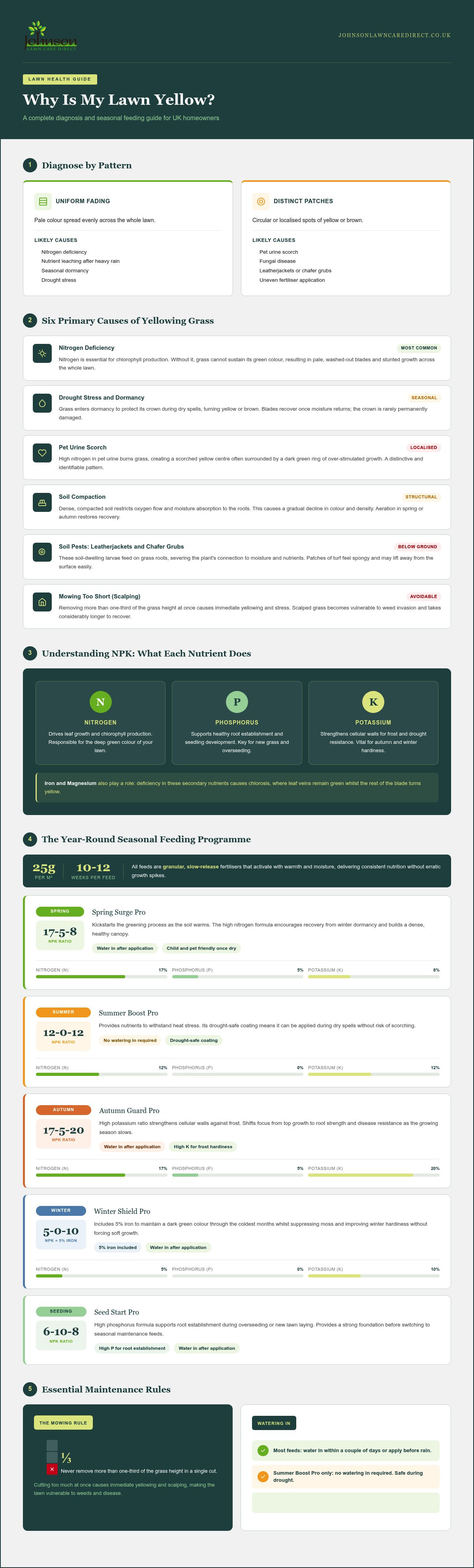
Determining why is my lawn yellow UK requires a methodical approach to visual diagnosis. When you observe your garden, the pattern of discolouration often reveals the underlying cause. Uniform fading across the entire lawn typically indicates a systemic issue; such as a lack of nutrition or seasonal dormancy. Conversely, distinct patches or circular spots often point toward localised stress; including pet urine, fungal activity, or pest infestations beneath the turf surface. Understanding these visual cues is the first step toward restoring the health and vitality of your outdoor space.
Seasonal transitions in the UK play a significant role in grass leaf pigmentation. During periods of heavy rainfall, essential nutrients can be leached from the soil, leaving the grass looking pale and sickly. In contrast, a sudden frost can damage the delicate tips of the grass blades, resulting in a straw-like appearance. Drought conditions also trigger a survival mechanism where the grass enters dormancy to protect its crown, causing the blades to turn yellow or brown until moisture returns.
Nutrient Deficiency and the Hunger Signal
Yellowing is frequently the first sign that your grass is hungry. Nitrogen is the fundamental building block of a green lawn; it is essential for producing chlorophyll, the pigment responsible for photosynthesis and that deep green colour. When nitrogen levels drop, the plant cannot sustain its health, leading to stunted growth and a washed-out appearance. A lack of secondary nutrients like iron and magnesium also contributes to chlorosis, where the veins of the leaf remain green whilst the rest of the blade turns yellow. Using a structured programme like the Lawn Envy System ensures your soil maintains the correct balance of these elements throughout the year.
Environmental Stress and Physical Damage
Domestic lawns often face physical challenges that manifest as yellowing. Pet urine is a common culprit; its high nitrogen content effectively burns the grass, creating a scorched centre often surrounded by a dark green ring of over-stimulated growth. Similarly, high nitrogen scorching can occur if granular fertilisers are applied unevenly or without being watered in. Environmental factors like soil compaction also restrict oxygen flow to the roots. When the soil is too dense, the roots cannot breathe or absorb moisture effectively, leading to a gradual decline in colour and density. Addressing these stressors involves a combination of timing, precision, and consistent maintenance.
The Role of Nitrogen and Seasonal Nutrition in Lawn Colour
Understanding NPK ratios is essential for any homeowner looking to maintain a professional-standard garden. These three letters represent Nitrogen (N), Phosphorus (P), and Potassium (K); the primary nutrients required for grass health. Nitrogen is the engine behind leaf growth and chlorophyll production. If you are asking why is my lawn yellow UK soil often lacks the specific nitrogen levels needed to sustain a deep green colour. Professional-grade granular fertilisers are superior to liquid alternatives because they provide a controlled, slow-release delivery of these nutrients over 10 to 12 weeks. Unlike liquid feeds that can cause erratic growth spikes, granular pellets activate with warmth and moisture to provide consistent, reliable nutrition.
Spring and Summer Feeding for Vibrant Growth
Applying Spring Surge Pro (17-5-8) at 25 grams per square metre kickstarts the greening process as the soil warms. This high-nitrogen formula encourages the grass to recover from winter dormancy and build a dense, healthy canopy. During the warmer months, Summer Boost Pro (12-0-12) provides the necessary nutrients to withstand heat stress. This feed is unique amongst our range; its drought-safe coating means it requires no watering in after application. This makes it a dependable solution for maintaining a vibrant lawn during dry spells when traditional fertilisers might cause scorching.
Autumn and Winter Protection for Root Strength
As the growing season slows, the focus shifts from top growth to root strength and disease resistance. Autumn Guard Pro (17-5-20) utilises a high-potassium ratio to strengthen the plant’s cellular walls against frost. This preparation ensures the lawn remains hardy throughout the autumn. For the winter months, Winter Shield Pro (5-0-10) includes 5% iron to maintain a dark green aesthetic and manage moss levels without forcing vulnerable new growth. All these granular feeds are child and pet friendly once they have been watered in and the grass has dried. Adopting the Lawn Envy System provides a simplified, professional-grade programme that ensures your garden receives the correct nutrition at the precise time it is needed.
Mowing and Watering Habits That Affect Lawn Health
Your weekly maintenance routine has a profound impact on the vibrancy of your grass. If you're currently asking why is my lawn yellow UK, the culprit might be your mower settings or your watering schedule. These factors dictate how the plant manages stress and how deep its root system can grow. Precision in these tasks is just as vital as the nutrition provided by the Lawn Envy System to ensure a healthy garden.
The golden rule of mowing is to never remove more than one-third of the grass height in a single session. Scalping the lawn by cutting it too short removes the photosynthetic part of the leaf, forcing the plant to use its energy reserves to recover. This leads to immediate yellowing and leaves the soil exposed to sunlight, which encourages weed seeds to germinate. Maintaining the correct height protects the plant crown and ensures the lawn remains dense and resilient against environmental pressures.
Professional Mowing Techniques for a Greener Look
Adjusting your mower height through the seasons is a simple way to maintain a healthy green. In the spring, aim for a height of 3-4 cm to encourage thick growth. As the temperature rises in summer, increase this to 4-5 cm. Leaving the blades slightly longer during heatwaves provides shade for the soil; this helps retain moisture and prevents the grass from entering a dormant, yellow state. It's equally important to ensure your mower blades are sharp. Dull blades shred the leaf tips rather than cutting them cleanly; these ragged edges quickly turn brown or yellow, giving the entire garden a scorched appearance.
Effective Watering Strategies for the UK Climate
Watering habits often determine whether a lawn thrives or struggles during dry spells. Deep, infrequent watering is far more effective than a daily light sprinkling. By applying a significant amount of water once or twice a week, you encourage the roots to grow deeper into the soil to find moisture. This creates a more drought-resistant plant. Daily sprinkling keeps the roots near the surface, making the grass vulnerable to even short periods of heat. To avoid fungal diseases, always water in the early morning so the leaf has time to dry before nightfall. If you're unsure whether your grass is suffering from thirst or another issue, you can explore our guide on why has my lawn gone brown for a detailed diagnosis.
Investigating Soil Health and Pest Infestations
Sometimes the answer to why is my lawn yellow UK isn't found on the leaf, but beneath the soil. Soil health and pest activity are often overlooked factors that lead to rapid discolouration. When the root system is compromised, the grass cannot access the nutrients provided by your feeding programme; no matter how high the quality of the fertiliser. Addressing these sub-surface issues is essential for maintaining the long-term vitality and aesthetic of your garden.
Dealing with Pests and Compaction
Leatherjackets (crane fly larvae) and chafer grubs are common UK pests that feed on grass roots during the spring and autumn. If you find yourself asking why is my lawn yellow UK gardens often suffer from these larvae without the owner realising. A clear sign of an infestation is yellowing patches that can be easily pulled up; like a piece of carpet. You might also notice increased bird activity, as starlings and crows peck at the turf to reach the larvae. To check for pests, peel back a small section of turf in a yellowing area to look for the grubs directly. If you find more than a few larvae in a small space, a targeted treatment may be necessary.
Soil compaction is another silent cause of yellowing. Heavy footfall or clay-heavy soils prevent oxygen and water from reaching the roots. This lack of pore space leads to poor drainage and nutrient lockout. Relieving this pressure through aeration is essential, but timing is critical. You should only aerate or scarify in spring or autumn whilst the grass is actively growing. This ensures the plant has the energy to recover and fill in any gaps quickly.
Managing Weeds and Moss
A healthy, dense lawn is your primary defence against weeds and moss. When the grass is thick and well-fed, it naturally crowds out competitors by limiting their access to light and space. This biological barrier is far more effective than relying solely on chemical treatments. For existing weeds that have already taken hold, selective weed killers like Weedol act as an effective complement to your seasonal feeding programme.
Moss thrives in damp, shaded areas where grass struggles. During the colder months, moss can quickly outcompete weakened grass, leading to a yellow or thin appearance. Using Winter Shield Pro (5-0-10) is vital here; its 5% iron content helps manage moss levels whilst maintaining a dark green colour throughout the winter. Like all our feeds, it is child and pet friendly once it has been watered in and has dried. This systemic approach ensures the grass remains strong enough to resist encroachment when the growing season returns.
Achieving Year-Round Green with a Professional Feeding Programme
Establishing a vibrant, resilient lawn is not a one-off task; it requires a systematic approach to nutrition. If you have been asking why is my lawn yellow UK, the answer is often found in inconsistent feeding. Grass plants are living organisms that require a steady supply of nutrients to maintain their cellular structure and deep green colour. A gap in feeding longer than 12 weeks often leads to the pale, yellowing appearance that homeowners find so discouraging. Transitioning from reactive, short-term gardening to a proactive maintenance programme ensures that your lawn has the resources it needs to resist stress before the damage becomes visible.
The Lawn Envy System Approach
The Lawn Envy System removes the complexity from professional lawn care by providing a structured, season-specific plan. Instead of guessing which products to buy at a garden centre, you receive automated deliveries of our professional-grade granular feeds directly to your door. Each application is designed to last for 10 to 12 weeks, providing a slow-release of nutrients that sustains the grass without causing the surge growth associated with liquid feeds. Subscribers also gain lifetime access to the Lawn Envy Masterclass; a comprehensive resource that provides expert guidance to help you understand why is my lawn yellow UK and how to prevent it. Our green-up guarantee reflects our commitment to your lawn's improvement, providing you with a personalised action plan to address specific garden issues.
Safety for the Whole Family
One of the primary concerns for homeowners is the safety of their children and pets. Our granular formulations are specifically designed to be child and pet friendly once they have been correctly applied. For most of our range, including Spring Surge Pro and Autumn Guard Pro, this involves watering the granules in within a couple of days of application. Once the fertiliser has been watered in and has dried, the lawn is completely safe for use. Summer Boost Pro is even simpler to manage; its unique drought-safe coating means it requires no watering in, allowing you to maintain your feeding schedule even during dry spells. This approach provides the peace of mind that comes from using reliable, high-standard products that deliver professional results whilst keeping your family safe. Consistent feeding through the seasons is the most effective way to ensure your garden remains a dense, healthy, and vibrant space for everyone to enjoy.
Restoring the Health and Vitality of Your Lawn
Understanding why is my lawn yellow UK is the first step toward moving away from reactive gardening and toward a systematic approach. Whether the issue was a specific nutrient deficiency, poor mowing habits, or sub-surface pests, the path to recovery involves restoring the biological balance of your soil. By choosing professional-grade granular feeds and adhering to seasonal NPK ratios, you can maintain a resilient garden that naturally resists moss and weeds throughout the year.
Johnson Lawn Care Direct is widely recognised for its commitment to high-standard results and simplified systems. Every programme provides seasonal deliveries of slow-release feeds tailored to the British climate; all backed by a green-up guarantee. Achieving aesthetic perfection in your garden is entirely possible with the right guidance and reliable solutions.
You deserve the pride that comes from a healthy, dark green lawn that stays vibrant across every season.
Frequently Asked Questions
Is it normal for my lawn to turn yellow after applying fertiliser?
Yellowing after application is not normal and usually indicates fertiliser scorch. This occurs when granular feeds are applied unevenly or left to sit on the leaf without being watered in. To prevent this, always use a spreader for even coverage and water the product in within 48 hours. The only exception is Summer Boost Pro, which features a drought-safe coating that does not require immediate watering.
Can I save a lawn that has already turned completely yellow?
Most yellow lawns can be saved if the root system remains alive. If the grass has turned yellow due to drought or seasonal dormancy, it is simply protecting itself and will recover with consistent hydration and a professional feeding programme. However, if the yellowing is caused by a complete root death from pests or chemical damage, you may need to overseed the area using Seed Start Pro.
How much water does my lawn need to stay green during a UK summer?
Your lawn typically requires about 2.5 cm of water per week during a UK summer to remain vibrant. It is more effective to provide this in one or two deep sessions rather than light daily sprinkling. This encourages roots to grow deeper into the soil, making the plant more resilient. If you're wondering why is my lawn yellow UK summers often provide enough heat to trigger dormancy if this moisture level isn't maintained.
Will mowing my lawn too short make it turn yellow?
Mowing your grass too short is a guaranteed way to cause yellowing. When you scalp the lawn, you remove the green, photosynthetic part of the leaf and expose the yellow stalks and crown. This stresses the plant and forces it to use vital energy reserves to recover. Always follow the one-third rule; never remove more than a third of the grass height in a single session to maintain health.
Are yellow patches always a sign of dog urine damage?
Yellow patches are frequently attributed to pet urine, but they can signify several other issues. Circular spots with a dark green outer ring are typical of high nitrogen in urine, yet distinct patches can also indicate fungal diseases like red thread or pest infestations. Leatherjackets and chafer grubs eat the roots, causing the grass to die in sections. Investigating the soil beneath the surface is necessary for an accurate diagnosis.
How quickly will my lawn turn green after applying a nitrogen-rich feed?
You can expect to see a visible improvement in colour within 7 to 10 days of applying a nitrogen-rich granular feed. Because professional-grade products like Spring Surge Pro are slow-release, they require warmth and moisture to activate. This methodical delivery ensures the grass stays green for 10 to 12 weeks; providing a steady supply of nutrients rather than a short-lived growth spike that often results from liquid alternatives.
Is it safe for my cat or dog to walk on the lawn after feeding?
It is perfectly safe for your pets to enjoy the garden once the granular feed has been watered in and the grass is dry. Our formulations are designed to be child and pet friendly, ensuring the whole family can use the lawn without concern. Simply ensure the granules have dissolved and the leaf surface is no longer damp before allowing your cat or dog back onto the treated area.
Should I scarify my lawn if it is currently yellow and stressed?
You should never scarify a lawn that is currently yellow and under stress. Scarification is an intensive process that removes thatch and moss, requiring the grass to be healthy and actively growing to recover. Performing this task on a stressed lawn can cause permanent damage. Wait until the grass has regained its green colour and vigour in the spring or autumn before considering any mechanical maintenance.
Disclaimer
The guides in our Lawn Care Library offer general lawn care information for UK homeowners. Every lawn is different, and factors such as soil, grass type, aspect and local conditions all affect what yours needs. For advice tailored specifically to your own lawn, take a look at our Personalised Lawn Envy Plan, or get in touch and we will be glad to help.


